
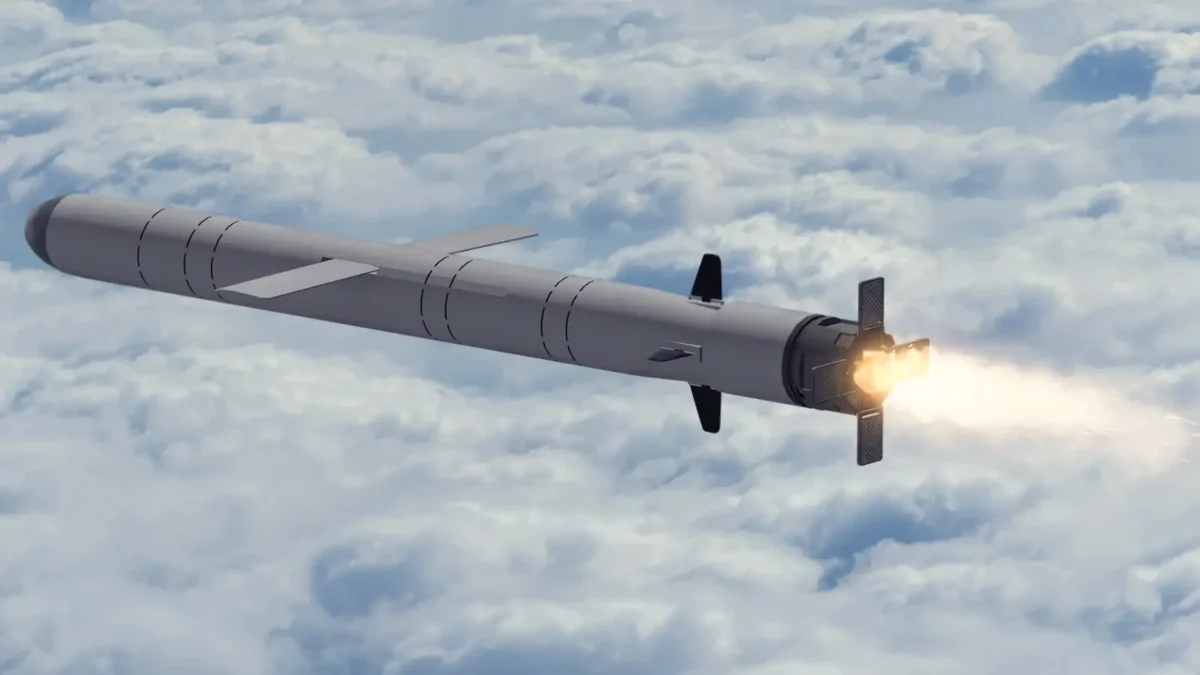
What is a Cruise Missile?
A cruise missile is a self-propelled, guided aerodynamic vehicle that remains within the Earth’s atmosphere for the duration of its flight. Unlike ballistic missiles, which follow a high-arcing trajectory into space, cruise missiles fly at low altitudes—often “hugging” the terrain or skimming the sea to avoid radar detection.
Key technical characteristics include:
Manoeuvrability: They can change course mid-flight to avoid air defences or hit moving targets.
Constant Propulsion: They are powered throughout their entire flight by jet, turbofan, or ramjet engines.
Precision Guidance: Using GPS, Inertial Navigation (INS), and terrain-matching systems, they can hit a target with “pinpoint” accuracy (often within 1–3 meters).
Top 5 Cruise Missiles: 2025 Comparison Table
| Missile Name | Origin | Max Range | Top Speed | Estimated Cost (Per Unit) |
|---|---|---|---|---|
| BrahMos | India / Russia | 800–900 km | Mach 3.0+ | ~$3.5M – $4.85M |
| Tomahawk (Block V) | USA | 1,600+ km | Mach 0.74 | ~$2.5M – $4.1M |
| Kalibr (3M-14) | Russia | 2,500 km | Mach 0.8 – 2.9 | ~$2.0M – $2.4M |
| Storm Shadow / SCALP | UK / France | 560 km | Mach 0.8 | ~$2.5M – $3.0M |
| CJ-10 / DF-10 | China | 1,500+ km | Mach 0.75 | ~Confidential |
1. BrahMos (India & Russia)
The BrahMos is widely regarded as the world’s fastest operational cruise missile. Its “fire and forget” capability and high kinetic energy make it nearly impossible for current CIWS (Close-In Weapon Systems) to intercept.
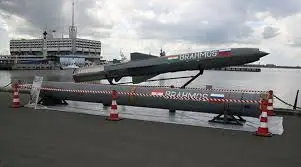
- Range: Standard versions reach 290–450 km; the Extended Range (ER) variant hits up to 800–900 km.
- Developed By: BrahMos Aerospace (Joint Venture between DRDO, India and NPO Mashinostroyeniya, Russia).
- Cost Per Missile: Approximately ₹34 Crore (~$4.85M USD) for extended-range versions.
- Operated By: Indian Army, Navy, Air Force, and the Philippine Marine Corps.
- Upcoming Versions: BrahMos-II (Hypersonic variant with Mach 8.0 speed) and BrahMos-NG (Next-Gen, a lighter version for smaller platforms).
2. Tomahawk Block V (United States)
The Tomahawk is the “gold standard” for long-range precision strikes. The latest Block V variant features upgraded navigation and a seeker capable of hitting moving maritime targets.
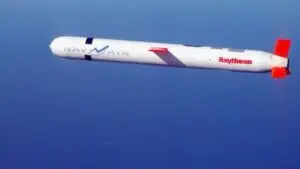
- Range: Over 1,600 km (1,000 miles).
- Developed By: Raytheon Missiles & Defense.
- Cost Per Missile: ~$2.5M for standard Block V; up to $4.1M for Maritime Strike versions.
- Operated By: USA, United Kingdom, Australia, Japan, and the Netherlands.
- Upcoming Versions: Continuous software upgrades and the “MST” (Maritime Strike Tomahawk) kit for existing Block IV stock.
3. Kalibr 3M-14 (Russia)
The Kalibr family is Russia’s primary deep-strike weapon. It gained notoriety for its dual-speed profile: cruising at subsonic speeds but accelerating to Mach 2.9 in the final phase to evade air defences.
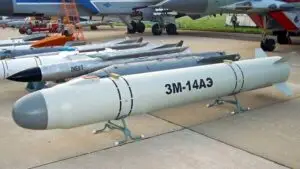
- Range: 1,500 km to 2,500 km for domestic land-attack variants.
- Developed By: Novator Design Bureau.
- Cost Per Missile: Estimated at $2.0M to $2.4M for the Russian military; export versions cost significantly more (~$6.5M).
- Operated By: Russia, India (export “Club” version), Vietnam, and Algeria.
- Upcoming Versions: Kalibr-M, a larger variant with a reported range of over 4,000 km, is currently in development.
4. Storm Shadow / SCALP-EG (UK & France)
Designed for “bunker-busting,” the Storm Shadow uses a BROACH (Bomb Royal Ordnance Augmented CHarge) warhead to penetrate hardened underground targets.
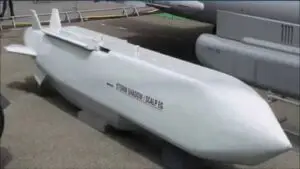
- Range: Up to 560 km.
- Developed By: MBDA (UK/France joint venture).
- Cost Per Missile: Approximately $2.5M – $3.0M.
- Operated By: UK, France, Italy, Greece, Saudi Arabia, and Ukraine.
- Upcoming Versions: FC/ASW (Future Cruise/Anti-Ship Weapon), a hypersonic Mach 5+ successor currently being developed by France and the UK.
5. CJ-10 / DF-10 (China)
The CJ-10 (Changjian-10) is the backbone of China’s land-attack cruise missile arsenal. It is highly versatile, with versions that can be launched from mobile trucks, ships, and H-6K bombers.
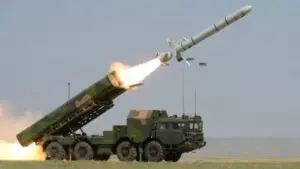
- Range: Estimated between 1,500 km and 2,000 km.
- Developed By: China Aerospace Science and Industry Corporation (CASIC).
- Cost Per Missile: Classified, but estimated to be lower than Western counterparts due to mass production.
- Operated By: People’s Liberation Army (China).
- Upcoming Versions: The CJ-20, an air-launched version with increased range and stealth features.
The Future: Hypersonic Cruise Missiles
The next frontier in missile technology is the shift from supersonic (Mach 1–5) to hypersonic (Mach 5+) speeds. Systems like Russia’s Zircon and the upcoming BrahMos-II are designed to fly so fast and low that they can bypass almost all modern missile defence systems.
see more about
BrahMos: The “Brahmastra” of Modern Warfare and India’s Defence Superiority
Why Do North and South Korea Hate Each Other? The Simple Truth
The $7.2 Million Mistake: Why the Alaska Purchase Haunted the USSR