
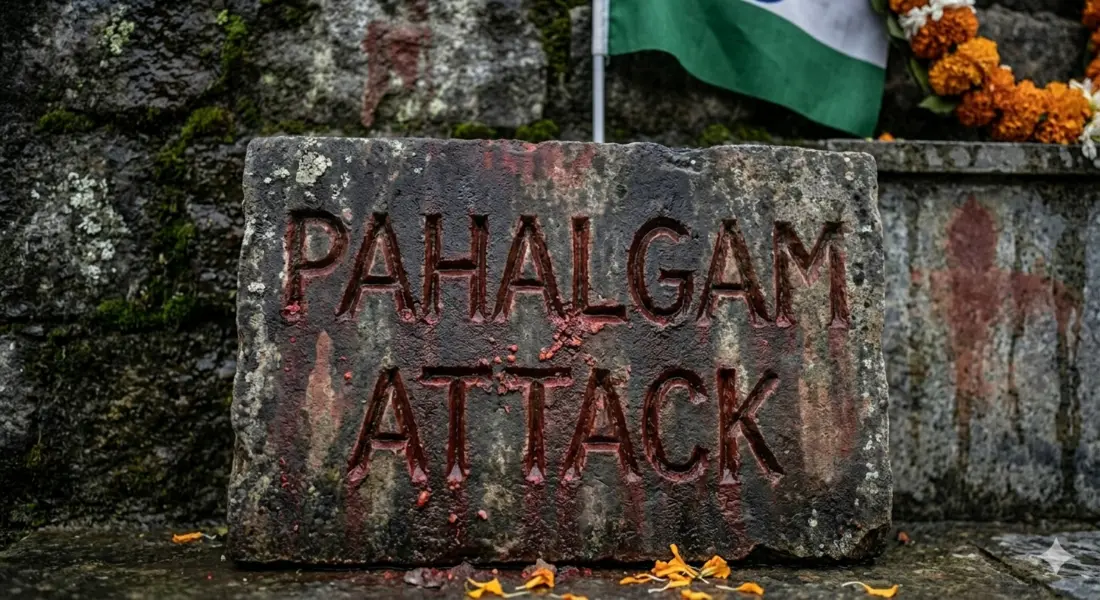
The Day the Silence Shattered: A Year Since Pahalgam
It was supposed to be a Tuesday like any other in the “Mini Switzerland” of India. The Baisaran Valley, nestled 7km from the heart of Pahalgam, was alive with the laughter of newlywed couples and families soaking in the pine-scented air. But at approximately 1:00 PM on April 22, 2025, that peace was decimated by the rattle of M4 carbines and AK-47s.
When and What Happened?
Between 1:00 PM and 3:00 PM, a group of 2 to 7 heavily armed terrorists from The Resistance Front (TRF)—a proxy of the Pakistan-based Lashkar-e-Taiba (LeT)—stormed the tourist meadows. In what has been described as the deadliest civilian assault in India since 2008, the attackers systematically singled out tourists, asking for their religious identity before opening fire. By the time the smoke cleared, 26 innocent lives were lost.
The victims weren’t just names on a list; they were Lieutenant Vinay Narwal on his honeymoon, bank managers, and local pony operators like Syed Adil Hussain Shah, who died trying to wrestle a weapon from an attacker to save his guests.
The Shadow of Pakistan
The investigation by the National Investigation Agency (NIA) quickly traced the digital footprints and command structure of the attackers to handlers in Muzaffarabad and Karachi. Handlers like Sajid Saifullah Jatt were identified as the masterminds directing the “Falcon Squad” from across the border. India accused Pakistan of using the TRF to incite communal violence and cripple Kashmir’s booming tourism economy.
A Global Outcry: How the World Reacted
The brutality of the Pahalgam terror attack drew unprecedented international condemnation.
- United States: President Donald Trump affirmed India’s “sovereign right to combat terrorism”.
- Russia: President Vladimir Putin called the crime “inexcusable” and pledged full counter-terror cooperation.
- Middle East: Saudi Arabia, the UAE, and Qatar issued strong condemnations, signaling a major diplomatic shift in support of India.
- Europe: The EU and nations like France and the UK stood firmly with New Delhi, stating that terrorism can never be justified.
How India Took Revenge: Operation Sindoor
India’s response was not just diplomatic; it was decisive. On the night of May 7, 2025, the Indian Armed Forces launched Operation Sindoor. Using high-precision strikes, including BrahMos missiles and Akash systems, India decimated nine terror launch pads and infrastructure deep inside enemy territory.
This was followed by Operation Mahadev, a 93-day hunt that culminated in July 2025 with the neutralisation of the three primary terrorists—Suleman, Afghani, and Jibran—bringing a measure of justice to the families of Baisaran.
Why This Anniversary Matters
Beyond the military response, India hit back diplomatically and economically, signaling a permanent shift in its counter-terror doctrine:
- The “Blood and Water” Policy: In a historic move, India suspended the Indus Waters Treaty, asserting the firm stance that “blood and water cannot flow together.” This move targeted the strategic interests of the sponsors of terror.
- Total Diplomatic Isolation: Pakistan’s diplomatic presence in New Delhi was halved, and the Attari-Wagah border was sealed indefinitely, cutting off trade and formal communication until terror infrastructure is dismantled.
- Resilience of Tourism: Despite the attempt to instill fear and cripple the local economy, record-breaking tourist numbers in Pahalgam have become a powerful symbol of national defiance against the shadow of the gun.
The Unseen Impact: Rebuilding Trust in the Valley
A year later, the meadows are green again, but the atmosphere has changed. Security is no longer just a physical presence; it is digital.
- QR-Code Identification: All local service providers and pony handlers now use a QR-based ID system to ensure every person in the sensitive zones is verified.
- Heightened Surveillance: Tourist hubs are now protected by layered, 24/7 AI-driven monitoring to prevent such a breach from ever happening again.
As we light candles today, we remember that India does not forget. We stand not just in grief, but in a quiet, firm resolve that certain boundaries should never be crossed.
A Call for a Terror-Free World
As we mark this anniversary, the message is clear: Terrorism must vanish. No political or ideological goal can ever justify the slaughter of innocent civilians. True freedom can only exist in a world where families can walk through meadows like Baisaran without fear. Every innocent life lost is a reminder that the global community must unite to eradicate this evil, ensuring that the “right to live” is never again held hostage by those who spread hatred.
see more about
The $7.2 Million Mistake: Why the Alaska Purchase Haunted the USSR
Why Do North and South Korea Hate Each Other? The Simple Truth
Good keep it on 🙂