
Introduction
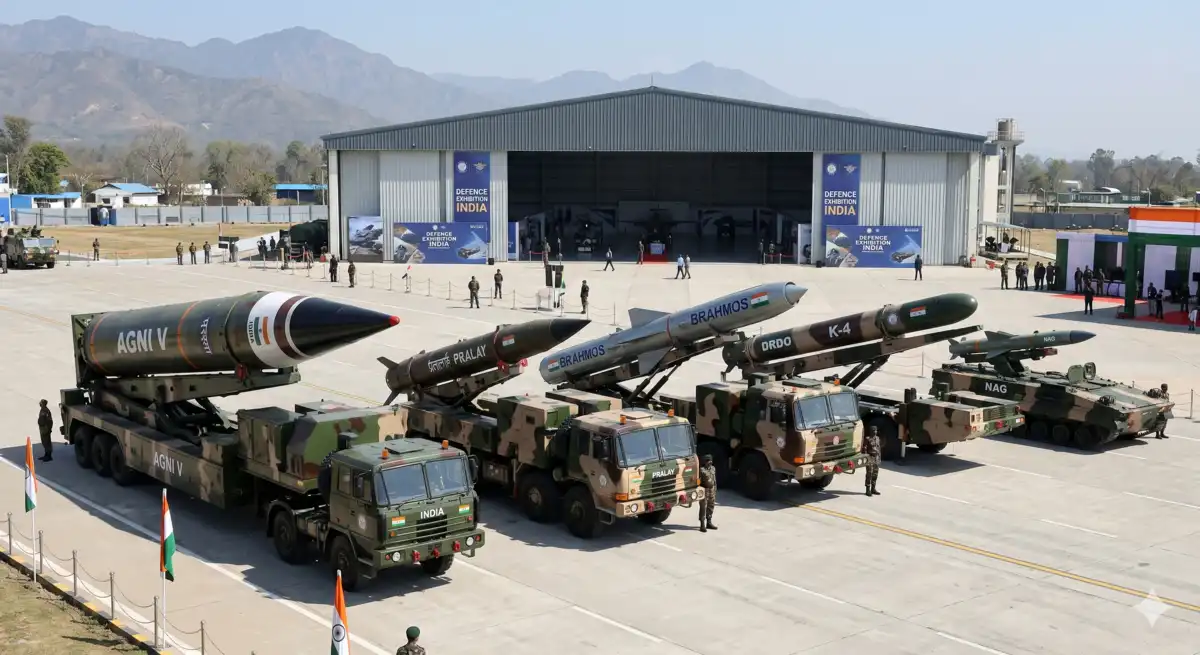
The global defense landscape has witnessed a tectonic shift as India evolves from the world’s largest arms importer to a sophisticated exporter of high-tech weaponry. Driven by the vision of Atmanirbhar Bharat, the DRDO (Defence Research and Development Organisation) has mastered the complexities of propulsion, seeker technology, and guidance systems. Today, India made missiles are not just tools of deterrence; they are symbols of national sovereignty. This DRDO missiles list 2026 highlights the “Saptarishi” of Indian firepower—the seven most lethal systems that ensure India remains a formidable power on the global stage.
1. Agni-V: The Continental Gatekeeper
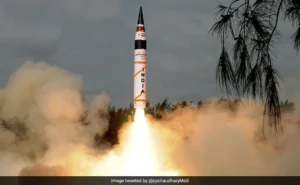
The Agni-V is the ultimate symbol of India’s strategic maturity. As an Intercontinental Ballistic Missile (ICBM), it ensures that India’s “No First Use” policy is backed by a credible and devastating second-strike capability. Its ability to reach any corner of the continent makes it a primary pillar of regional stability.
- Speed: Hypersonic (Mach 24 terminal phase)
- Status: Operational (Strategic Forces Command)
- Cost: Approx. ₹50 Crore ($6 Million USD)
- Payload & Lethality: 1,500 kg; Nuclear-capable with MIRV (Multiple Independently Targetable Re-entry Vehicle) tech.
- Range & Accuracy: 5,500 – 8,000 km; Pinpoint precision with NavIC integration.
- Guidance System: Ring Laser Gyro-based Inertial Navigation (RLG-INS).
- Propulsion & Operation: Three-stage solid rocket motor; Canisterized for rapid road-mobile launch.
2. BrahMos ER: The Supersonic Predator
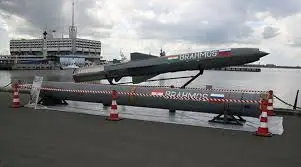
Often cited as the most successful defense joint venture, the BrahMos Extended Range (ER) variant is a masterclass in lethality. With a high indigenous content including the seeker and booster, it is arguably the most feared cruise missile in modern naval warfare.
- Status: Operational (Tri-service induction)
- Cost: Approx. ₹38 Crore ($4.5 Million USD)
- Payload & Lethality: 300 kg conventional/nuclear; “Bunker Buster” kinetic energy impact.
- Range & Accuracy: 450 – 800 km; Pinpoint accuracy with 1-meter CEP.
- Guidance System: Active Radar Seeker + SatNav.
- Propulsion & Operation: Two-stage (Solid booster + Liquid Ramjet).
3. Pralay: The Tactical Disruptor
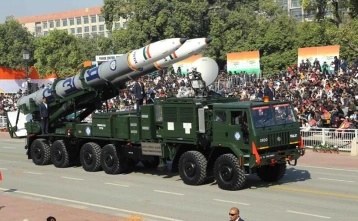
Pralay fills the critical gap between short-range rockets and long-range ballistic missiles. It is a quasi-ballistic missile that can maneuver in mid-flight, making it a nightmare for enemy interceptors like the S-300 or S-400 systems.
- Speed: Supersonic (Mach 1.1 to 1.6 terminal)
- Status: Induction Phase (Indian Army)
- Cost: Approx. ₹20 Crore ($2.4 Million USD)
- Payload & Lethality: 500 – 1,000 kg conventional warhead.
- Range & Accuracy: 150 – 500 km; High precision tactical strikes.
- Guidance System: State-of-the-art Inertial + DSMAC (Digital Scene Matching).
- Propulsion & Operation: Two-stage solid propellant; Road-mobile canister launch.
4. Astra Mk-II: The Air-to-Air Assassin
The Astra Mk-II has revolutionized India’s aerial combat strategy. By mastering Beyond Visual Range (BVR) technology, DRDO has given Indian pilots the ability to strike enemy jets before they even appear on the horizon, ensuring air superiority.
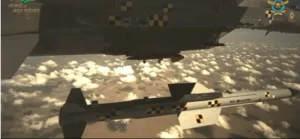
- Speed: Hypersonic (Mach 4.5+)
- Status: Advanced Testing / Initial Induction
- Cost: Approx. ₹8 Crore ($1 Million USD)
- Payload & Lethality: 15 kg High-Explosive pre-fragmented warhead.
- Range & Accuracy: 160 km; Exceptional maneuvering for high-G kills.
- Guidance System: Fiber Optic Gyro-based INS + Active Radar Homing.
- Propulsion & Operation: Dual-pulse solid rocket motor; Launched from Su-30MKI and Tejas.
5. K-4 SLBM: The Silent Guardian
As the primary weapon of the Arihant-class submarines, the K-4 Submarine Launched Ballistic Missile (SLBM) is India’s most survivable deterrent. Hidden in the depths of the ocean, it ensures that any aggression against India will face an inevitable and overwhelming response.
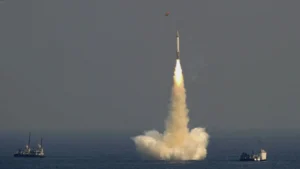
- Speed: Hypersonic
- Status: Operational / Strategic Deployment
- Cost: Approx. ₹90 Crore ($10.8 Million USD)
- Payload & Lethality: 2,000 kg nuclear warhead capacity.
- Range & Accuracy: 3,500 km.
- Guidance System: Advanced Inertial Navigation with satellite updates.
- Propulsion & Operation: Two-stage solid fuel; Vertical launch from submerged submarine.
6. Akash-NG: The Invincible Shield
The Akash-NG (New Generation) is a fast-reaction surface-to-air missile designed to counter agile threats like drones, cruise missiles, and stealth aircraft. It represents a significant leap in miniaturization and seeker sensitivity.
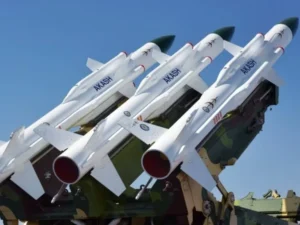
- Speed: Mach 2.5+
- Status: Operational Induction (2025-26)
- Cost: Approx. ₹4 Crore ($0.48 Million USD)
- Payload & Lethality: High-Explosive fragmentation with proximity fuse.
- Range & Accuracy: 70 – 80 km; Multi-target engagement capability.
- Guidance System: Indigenous Active Radar Seeker (Fire-and-forget).
- Propulsion & Operation: Dual-pulse solid rocket motor; Canisterized for 360-degree coverage.
7. Nag (Prospina): The Tank-Hunter
Nag is a third-generation Anti-Tank Guided Missile (ATGM) that uses “top-attack” logic. It strikes the thinnest part of a tank’s armor, making even the most advanced Main Battle Tanks (MBTs) vulnerable to its strike.
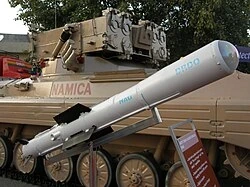
- Speed: 230 m/s (Subsonic)
- Status: Operational
- Cost: Approx. ₹1.5 Crore ($0.18 Million USD)
- Payload & Lethality: 8 kg Tandem HEAT warhead (penetrates reactive armor).
- Range & Accuracy: 4 – 7 km; High hit probability.
- Guidance System: Imaging Infrared (IIR) Seeker with Lock-on-before-launch.
- Propulsion & Operation: Single-stage solid fuel; Launched from NAMICA vehicle.
The “Operation Sindoor” Connection
The tactical relevance of indigenous missiles of India was proven beyond doubt during Operation Sindoor. In this high-stakes environment, the BrahMos acted as the primary offensive tool, neutralizing hardened command centers with such speed that enemy reaction time was reduced to zero. Simultaneously, the Akash defense system provided a “protective dome” over Indian assets, successfully intercepting a swarm of hostile drones and incoming projectiles. This synergy between offensive and defensive indigenous tech demonstrated that Indian self-reliance isn’t just about manufacturing—it’s about battlefield dominance.
Why Indigenous Matters
- Supply Chain Sovereignty: During conflicts, foreign suppliers often withhold spare parts. With India made missiles, the supply line is entirely domestic.
- Cost-Efficiency: Developing missiles in-house costs roughly 40-50% less than importing systems like the American Patriot or the French Scalp.
- Algorithmic Freedom: Indigenous software allows India to customize guidance algorithms to counter specific threats without needing permission from foreign OEMs.
Conclusion
The evolution of these deadliest Indian missiles signals a new era in global geopolitics. No longer a passive buyer, India is now a provider of security, with nations across the globe queuing up for systems like BrahMos and Akash. As DRDO pushes into hypersonic glide vehicles and directed-energy weapons, the future of India’s defense is not just “Made in India”—it is “Leading from India.”
see more about BrahMos: The “Brahmastra” of Modern Warfare and India’s Defence Superiority
see more about India’s Fighter Jets in 2026: Rafale, Su-30MKI, Tejas
see more about What is Strait of Hormuz? Why It Matters to the World