<div class="shared-counts-wrap before_content style-axil_style"><a href="https://www.facebook.com/sharer/sharer.php?u=https://nationnotifier.com/best-assault-rifles-world-2026/&display=popup&ref=plugin&src=share_button" title="Share on Facebook" target="_blank" rel="nofollow noopener noreferrer" class="shared-counts-button facebook shared-counts-no-count" data-postid="4196" data-social-network="Facebook" data-social-action="Share" data-social-target="https://nationnotifier.com/best-assault-rifles-world-2026/"><span class="shared-counts-icon-label"><span class="shared-counts-icon"><svg version="1.1" xmlns="http://www.w3.org/2000/svg" width="18.8125" height="32" viewBox="0 0 602 1024"><path d="M548 6.857v150.857h-89.714q-49.143 0-66.286 20.571t-17.143 61.714v108h167.429l-22.286 169.143h-145.143v433.714h-174.857v-433.714h-145.714v-169.143h145.714v-124.571q0-106.286 59.429-164.857t158.286-58.571q84 0 130.286 6.857z"></path></svg></span><span class="shared-counts-label">Facebook</span></span></a><a href="https://twitter.com/share?url=https://nationnotifier.com/best-assault-rifles-world-2026/&text=6%20Best%20Assault%20Rifles%20in%20the%20World%20in%202026%20%7C%20Defence%20Analysis" title="Share on Twitter" target="_blank" rel="nofollow noopener noreferrer" class="shared-counts-button twitter shared-counts-no-count" data-postid="4196" data-social-network="Twitter" data-social-action="Tweet" data-social-target="https://nationnotifier.com/best-assault-rifles-world-2026/"><span class="shared-counts-icon-label"><span class="shared-counts-icon"><svg viewBox="0 0 24 24" xmlns="http://www.w3.org/2000/svg"><path d="M13.8944 10.4695L21.3345 2H19.5716L13.1085 9.35244L7.95022 2H1.99936L9.80147 13.1192L1.99936 22H3.76218L10.5832 14.2338L16.0318 22H21.9827L13.8944 10.4695ZM11.4792 13.2168L10.6875 12.1089L4.39789 3.30146H7.10594L12.1833 10.412L12.9717 11.5199L19.5708 20.7619H16.8628L11.4792 13.2168Z" /></svg></span><span class="shared-counts-label">Tweet</span></span></a><a href="https://www.linkedin.com/shareArticle?mini=true&url=https://nationnotifier.com/best-assault-rifles-world-2026/" title="Share on LinkedIn" target="_blank" rel="nofollow noopener noreferrer" class="shared-counts-button linkedin shared-counts-no-count" data-postid="4196" data-social-network="LinkedIn" data-social-action="Share" data-social-target="https://nationnotifier.com/best-assault-rifles-world-2026/"><span class="shared-counts-icon-label"><span class="shared-counts-icon"><svg version="1.1" xmlns="http://www.w3.org/2000/svg" width="27.4375" height="32" viewBox="0 0 878 1024"><path d="M199.429 357.143v566.286h-188.571v-566.286h188.571zM211.429 182.286q0.571 41.714-28.857 69.714t-77.429 28h-1.143q-46.857 0-75.429-28t-28.571-69.714q0-42.286 29.429-70t76.857-27.714 76 27.714 29.143 70zM877.714 598.857v324.571h-188v-302.857q0-60-23.143-94t-72.286-34q-36 0-60.286 19.714t-36.286 48.857q-6.286 17.143-6.286 46.286v316h-188q1.143-228 1.143-369.714t-0.571-169.143l-0.571-27.429h188v82.286h-1.143q11.429-18.286 23.429-32t32.286-29.714 49.714-24.857 65.429-8.857q97.714 0 157.143 64.857t59.429 190z"></path></svg></span><span class="shared-counts-label">LinkedIn</span></span></a><a href="https://pinterest.com/pin/create/button/?url=https://nationnotifier.com/best-assault-rifles-world-2026/&media=https://nationnotifier.com/wp-content/uploads/2026/06/best-assault-rifles-in-the-world-2026.webp&description=6%20Best%20Assault%20Rifles%20in%20the%20World%20in%202026%20|%20Defence%20Analysis" title="Share on Pinterest" target="_blank" rel="nofollow noopener noreferrer" class="shared-counts-button pinterest shared-counts-no-count" data-postid="4196" data-pin-do="none" data-social-network="Pinterest" data-social-action="Pin" data-social-target="https://nationnotifier.com/best-assault-rifles-world-2026/"><span class="shared-counts-icon-label"><span class="shared-counts-icon"><svg version="1.1" xmlns="http://www.w3.org/2000/svg" width="22.84375" height="32" viewBox="0 0 731 1024"><path d="M0 341.143q0-61.714 21.429-116.286t59.143-95.143 86.857-70.286 105.714-44.571 115.429-14.857q90.286 0 168 38t126.286 110.571 48.571 164q0 54.857-10.857 107.429t-34.286 101.143-57.143 85.429-82.857 58.857-108 22q-38.857 0-77.143-18.286t-54.857-50.286q-5.714 22.286-16 64.286t-13.429 54.286-11.714 40.571-14.857 40.571-18.286 35.714-26.286 44.286-35.429 49.429l-8 2.857-5.143-5.714q-8.571-89.714-8.571-107.429 0-52.571 12.286-118t38-164.286 29.714-116q-18.286-37.143-18.286-96.571 0-47.429 29.714-89.143t75.429-41.714q34.857 0 54.286 23.143t19.429 58.571q0 37.714-25.143 109.143t-25.143 106.857q0 36 25.714 59.714t62.286 23.714q31.429 0 58.286-14.286t44.857-38.857 32-54.286 21.714-63.143 11.429-63.429 3.714-56.857q0-98.857-62.571-154t-163.143-55.143q-114.286 0-190.857 74t-76.571 187.714q0 25.143 7.143 48.571t15.429 37.143 15.429 26 7.143 17.429q0 16-8.571 41.714t-21.143 25.714q-1.143 0-9.714-1.714-29.143-8.571-51.714-32t-34.857-54-18.571-61.714-6.286-60.857z"></path></svg></span><span class="shared-counts-label">Pin</span></span></a></div>
<p>Assault rifles remain the cornerstone of modern ground combat. In 2026, militaries worldwide are re-evaluating their small arms inventories — driven by lessons learned from high-intensity conflicts in Ukraine, the Middle East, and across the Indo-Pacific strategic theatre. The result is a new generation of rifles that must balance lethality, reliability, modularity, and compatibility with next-generation soldier systems.</p>
<p>This analysis ranks the six most combat-relevant and militarily significant assault rifles in the world today. The ranking is based on actual military adoption, documented battlefield performance, technical specifications, and analyst assessments — not manufacturer marketing. A special ‘Made in India’ spotlight examines the AK-203, which represents India’s most significant small arms induction programme in decades.</p>
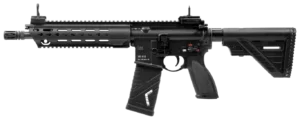
<h3 class="wp-block-heading"><strong>1. HK416 A8 — Germany (Heckler & Koch)</strong></h3>
<div class="wp-block-image">
<figure data-spectra-id="spectra-mq9327to-6ubban" class="alignright size-medium is-resized"><img src="https://nationnotifier.com/wp-content/uploads/2026/06/hk416-a8-assault-rifle-300x120.webp" alt="best assault rifles in the world HK416 A8" class="wp-image-4199" /></figure>
</div>
<p>The HK416 has been the benchmark assault rifle for elite military units worldwide since the mid-2000s, when it gained prominence after its use in high-profile special operations. The A8 variant, introduced in the early 2020s, represents the most refined iteration of this platform — optimised for both conventional infantry and special operations forces (SOF) use. It is the primary service rifle of the French Army, Norwegian Armed Forces, and is extensively used by special operations units across the NATO alliance.</p>
<h4 class="wp-block-heading"><strong>Technical Specifications</strong></h4>
<figure class="wp-block-table"><table class="has-fixed-layout"><tbody><tr><td><strong>Specification</strong></td><td><strong>Details</strong></td></tr><tr><td>Manufacturer</td><td>Heckler & Koch, Germany</td></tr><tr><td>Calibre</td><td>5.56×45mm NATO</td></tr><tr><td>Operating System</td><td>Short-stroke gas piston</td></tr><tr><td>Barrel Length</td><td>14.5 in (standard), variants available</td></tr><tr><td>Overall Length</td><td>690–970 mm (adjustable)</td></tr><tr><td>Weight (unloaded)</td><td>3.6 kg</td></tr><tr><td>Effective Range</td><td>400–500 m (point target), 800 m (area target)</td></tr><tr><td>Rate of Fire</td><td>700–900 RPM (cyclic)</td></tr><tr><td>Magazine Capacity</td><td>30 rounds (STANAG compatible)</td></tr><tr><td>Rail System</td><td>M-LOK / Picatinny (MIL-STD-1913)</td></tr><tr><td>Suppressor Ready</td><td>Yes — integral suppressor compatibility</td></tr><tr><td>Countries in Service</td><td>France, Norway, Germany (KSK), USA (DEVGRU/Delta), multiple NATO SOF units</td></tr></tbody></table></figure>
<h4 class="wp-block-heading"><strong>Military Adoption</strong></h4>
<p>The HK416 is the standard infantry rifle of the French Army (replacing the FAMAS) and the Norwegian Armed Forces. It is the preferred primary weapon of US Naval Special Warfare Development Group (DEVGRU) and 1st Special Forces Operational Detachment-Delta (Delta Force). Multiple European special operations commands also field the HK416 as their primary or secondary assault rifle.</p>
<h4 class="wp-block-heading"><strong>Strengths and Weaknesses</strong></h4>
<p><strong>Strengths</strong></p>
<ul class="wp-block-list">
<li>Short-stroke gas piston system significantly reduces fouling in the action, increasing reliability</li>
<li>Extensively combat-proven across multiple theatres including Afghanistan, Iraq, Syria, Mali, and Sahel</li>
<li>Superior reliability compared to DI (direct impingement) systems in adverse conditions</li>
<li>Modular design accommodates barrel length changes without specialist tools</li>
<li>Strong optics ecosystem — compatible with all NATO-standard fire control systems</li>
<li>Adopted by Tier 1 SOF units widely regarded as the most demanding users of small arms</li>
</ul>
<p><strong>Weaknesses</strong></p>
<ul class="wp-block-list">
<li>Heavier than comparable DI-system rifles due to the piston mechanism</li>
<li>Higher unit cost compared to M4A1 and AK-pattern rifles</li>
<li>Short-stroke piston can cause carrier tilt under extreme conditions if not maintained</li>
<li>5.56mm NATO calibre faces growing scrutiny in near-peer conflict scenarios requiring greater terminal effect</li>
</ul>
<h4 class="wp-block-heading"><strong>Combat Record</strong></h4>
<p>The HK416’s combat record is exceptional by any analytical standard. It achieved global attention when it was confirmed as the weapon used during Operation Neptune Spear (2011). French forces have relied on it extensively during Operation Barkhane in the Sahel, and Norwegian Special Operations Forces have deployed it across multiple UN and NATO-mandated missions. No other rifle in the 5.56mm class has a comparable record of sustained SOF use across diverse operational environments.</p>
<h4 class="wp-block-heading"><strong>Expert Analysis</strong></h4>
<p>The HK416 A8 is the gold standard of modern assault rifles — not for any single specification, but for the totality of its operational performance. Its piston system gives it a decisive edge in sustained fire operations and adverse environments. The A8 variant improves upon previous generations with enhanced ergonomics, a slimmer handguard, and improved suppressor compatibility. As militaries push toward integrated soldier systems, the HK416’s mature accessory ecosystem and NATO-wide logistics support give it a structural advantage over newer entrants. If one rifle defines what a modern infantry weapon should be in 2026, the HK416 A8 is that rifle.</p>
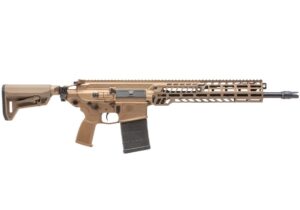
<h3 class="wp-block-heading"><strong>2. SIG MCX Spear / XM7 — USA (SIG Sauer)</strong></h3>
<div class="wp-block-image">
<figure data-spectra-id="spectra-mq934pxu-6yxs4e" class="alignright size-medium is-resized"><img src="https://nationnotifier.com/wp-content/uploads/2026/06/sig-mcx-spear-xm7-300x210.jpg" alt="SIG MCX Spear XM7 next generation assault rifle" class="wp-image-4200" /></figure>
</div>
<p>The SIG MCX Spear — designated XM7 in US Army service and formally adopted as the M7 — is the most significant small arms development in the United States military in over half a century. It fires the new 6.8×51mm Common Cartridge (also known as .277 SIG Fury), which was specifically designed to defeat near-peer adversary body armour at extended ranges. The US Army’s Next Generation Squad Weapon (NGSW) programme selected the XM7 rifle and XM250 automatic rifle in 2022, and fielding is now underway with infantry brigade combat teams.</p>
<h4 class="wp-block-heading"><strong>Technical Specifications</strong></h4>
<figure class="wp-block-table"><table class="has-fixed-layout"><tbody><tr><td><strong>Specification</strong></td><td><strong>Details</strong></td></tr><tr><td>Manufacturer</td><td>SIG Sauer, USA</td></tr><tr><td>Calibre</td><td>6.8×51mm Common Cartridge (.277 SIG Fury)</td></tr><tr><td>Operating System</td><td>Short-stroke gas piston, rotating bolt</td></tr><tr><td>Barrel Length</td><td>13 in (standard infantry)</td></tr><tr><td>Overall Length</td><td>711–940 mm</td></tr><tr><td>Weight (unloaded)</td><td>3.97 kg (heavier than M4A1)</td></tr><tr><td>Effective Range</td><td>500 m (point target, suppressed), 600+ m (unsuppressed)</td></tr><tr><td>Muzzle Velocity</td><td>~823 m/s (standard load)</td></tr><tr><td>Magazine Capacity</td><td>20 rounds (hybrid-case ammunition)</td></tr><tr><td>Rail System</td><td>Picatinny / M-LOK</td></tr><tr><td>Suppressor</td><td>Integrated suppressor as standard issue</td></tr><tr><td>Countries in Service</td><td>USA (primary infantry units, ongoing fielding)</td></tr></tbody></table></figure>
<h4 class="wp-block-heading"><strong>Military Adoption</strong></h4>
<p>The XM7 (now M7) is entering service with US Army infantry units as part of the NGSW programme. It is designed to replace the M4A1 carbine and M249 SAW (Squad Automatic Weapon) in close combat roles. Given US influence on NATO procurement, several allied nations are closely evaluating the platform. The 6.8×51mm cartridge is being proposed as a future NATO standard, which would drive broader adoption if accepted.</p>
<h4 class="wp-block-heading"><strong>Strengths and Weaknesses</strong></h4>
<p><strong>Strengths</strong></p>
<ul class="wp-block-list">
<li>6.8×51mm cartridge defeats Level IV body armour at standard infantry engagement ranges — a significant leap over 5.56mm</li>
<li>Integrated suppressor dramatically reduces acoustic signature and muzzle flash, improving tactical concealment</li>
<li>Designed from the outset to interface with the Integrated Visual Augmentation System (IVAS) — a leap in future soldier compatibility</li>
<li>Hybrid steel-brass cartridge case provides superior chamber pressure management</li>
<li>Short-stroke piston system provides superior reliability over the legacy M4A1 direct impingement</li>
</ul>
<p><strong>Weaknesses</strong></p>
<ul class="wp-block-list">
<li>Weight penalty is significant — the M7 with a loaded 20-round magazine is substantially heavier than an M4A1 with 30 rounds</li>
<li>Ammunition cost and logistical complexity of 6.8×51mm remain serious programme concerns</li>
<li>20-round magazine capacity reduces suppressive fire effectiveness compared to 30-round STANAG</li>
<li>NATO interoperability issues — non-standard calibre creates resupply complications in coalition operations</li>
<li>Fielding remains limited in 2026 — combat record is minimal compared to legacy platforms</li>
</ul>
<h4 class="wp-block-heading"><strong>Combat Record</strong></h4>
<p>The XM7/M7 is still in early fielding as of 2026, with limited deployments. Initial reports from units that have received the rifle indicate strong performance in range evaluation and training scenarios, but meaningful battlefield data is not yet available. The platform’s potential is significant, but its ultimate battlefield record remains to be written.</p>
<h4 class="wp-block-heading"><strong>Expert Analysis</strong></h4>
<p>The SIG MCX Spear/XM7 represents a paradigm shift rather than an incremental improvement. The decision to change calibre after 60 years of 5.56mm dominance reflects hard lessons from analysis of potential near-peer conflicts — where body armour capable of defeating standard NATO rifle rounds is increasingly prevalent. The 6.8×51mm cartridge’s ability to defeat modern ceramic plate armour at combat distances addresses a genuine operational gap. However, the weight, logistics burden, and reduced magazine capacity are real tactical trade-offs. In 2026, the XM7 is the most technically ambitious infantry rifle in the world — whether it is the most effective one in practice will depend on how the US Army manages those trade-offs in sustained operations.</p>
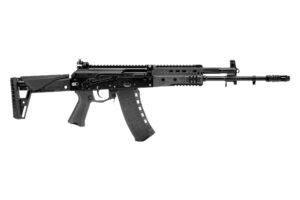
<h3 class="wp-block-heading"><strong>3. AK-12 — Russia (Kalashnikov Concern)</strong></h3>
<div class="wp-block-image">
<figure data-spectra-id="spectra-mq937f12-3pnasf" class="alignright size-medium is-resized"><img src="https://nationnotifier.com/wp-content/uploads/2026/06/ak-12-assault-rifle-300x200.jpg" alt="AK-12 assault rifle modern Russian military rifle" class="wp-image-4201" /></figure>
</div>
<p>The AK-12 is the Russian Armed Forces’ current standard-issue assault rifle, representing the most significant modernisation of the Kalashnikov platform since the AKM in the 1960s. It entered service with Russian ground forces around 2018 and has now been fielded at scale across infantry, airborne, and special operations units. The conflict in Ukraine since 2022 has provided the largest single operational evaluation of this platform in modern combat.</p>
<h4 class="wp-block-heading"><strong>Technical Specifications</strong></h4>
<figure class="wp-block-table"><table class="has-fixed-layout"><tbody><tr><td><strong>Specification</strong></td><td><strong>Details</strong></td></tr><tr><td>Manufacturer</td><td>Kalashnikov Concern, Izhevsk, Russia</td></tr><tr><td>Calibre</td><td>5.45×39mm (primary) / 7.62×39mm (AK-15 variant)</td></tr><tr><td>Operating System</td><td>Long-stroke gas piston, rotating bolt</td></tr><tr><td>Barrel Length</td><td>415 mm</td></tr><tr><td>Overall Length</td><td>690–940 mm (folding/adjustable stock)</td></tr><tr><td>Weight (unloaded)</td><td>3.5 kg</td></tr><tr><td>Effective Range</td><td>400 m (point target), 800 m (area target)</td></tr><tr><td>Rate of Fire</td><td>700 RPM (cyclic)</td></tr><tr><td>Magazine Capacity</td><td>30 rounds (standard)</td></tr><tr><td>Rail System</td><td>Picatinny on top receiver, M-LOK compatible handguard options</td></tr><tr><td>Suppressor Ready</td><td>Yes</td></tr><tr><td>Countries in Service</td><td>Russia (primary), select CIS states, export markets</td></tr></tbody></table></figure>
<h4 class="wp-block-heading"><strong>Military Adoption</strong></h4>
<p>The AK-12 is standard-issue for Russian ground forces, airborne troops (VDV), and naval infantry. The Rosgvardia (National Guard) also operates the platform. Export markets include several Central Asian, African, and Middle Eastern states that rely on Russian military assistance. The AK-15 variant, chambered in 7.62×39mm, is favoured by some special operations units for its superior penetration against soft-skinned vehicles and light cover.</p>
<h4 class="wp-block-heading"><strong>Strengths and Weaknesses</strong></h4>
<p><strong>Strengths</strong></p>
<ul class="wp-block-list">
<li>Legendary Kalashnikov reliability — the long-stroke piston system is exceptionally tolerant of fouling and adverse conditions</li>
<li>Massive global logistics network — 5.45×39mm and 7.62×39mm ammunition is among the most widely available on earth</li>
<li>Improved ergonomics over legacy AK-74 — folding adjustable stock, improved pistol grip, better trigger group</li>
<li>Picatinny rail allows integration of modern optics, LPVO scopes, and thermal sights</li>
<li>Combat-proven at scale in Ukraine — operational data from a high-intensity peer conflict is invaluable</li>
</ul>
<p><strong>Weaknesses</strong></p>
<ul class="wp-block-list">
<li>Ukraine combat experience has exposed vulnerabilities — Russian forces have documented reliability issues with early-production batches under sustained high-intensity use</li>
<li>Heavier than the HK416 and modern Western competitors</li>
<li>Long-stroke piston limits the precision of the trigger break compared to short-stroke competitors</li>
<li>5.45×39mm is not NATO-standard, limiting coalition interoperability</li>
<li>Manufacturing quality has been inconsistent under wartime production surge pressures</li>
</ul>
<h4 class="wp-block-heading"><strong>Combat Record</strong></h4>
<p>The AK-12 has been fielded extensively in the conflict in Ukraine, making it one of the most operationally tested rifles in the world in the period 2022-2026. Field reports from both Russian and captured-weapon evaluations indicate generally satisfactory performance, but with quality control concerns emerging from accelerated wartime production. Ukrainian forces have also captured and evaluated significant numbers of the platform, providing indirect intelligence on its performance.</p>
<h4 class="wp-block-heading"><strong>Expert Analysis</strong></h4>
<p>The AK-12 is the latest chapter in the most successful military small arms lineage in history. The modernisation is genuine and meaningful — the ergonomics, optics compatibility, and modular handguard represent real improvements over the AK-74M. However, the Ukraine conflict has also been a stress test that has revealed the limitations of the Russian defence industrial base when operating under wartime surge conditions. The AK-12 is a reliable, effective, and globally relevant weapon system. Its placement at number three reflects the genuine quality of the platform, while acknowledging that the HK416 and XM7 represent higher levels of technical sophistication in specific areas — particularly suppressor integration and advanced optics compatibility.</p>
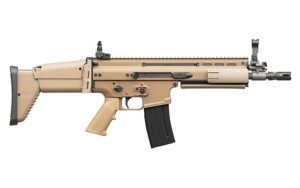
<h3 class="wp-block-heading"><strong>4. FN SCAR-L / SCAR Series — Belgium (FN Herstal)</strong></h3>
<div class="wp-block-image">
<figure data-spectra-id="spectra-mq938sux-a98naa" class="alignright size-medium is-resized"><img src="https://nationnotifier.com/wp-content/uploads/2026/06/fn-scar-l-assault-rifle-300x188.jpg" alt="FN SCAR series assault rifle special operations" class="wp-image-4202" /></figure>
</div>
<p>The FN SCAR (Special Operations Forces Combat Assault Rifle) was developed by Belgian manufacturer FN Herstal in response to a US Special Operations Command (SOCOM) requirement for a modular, multi-calibre rifle system. The SCAR-L (Light) in 5.56×45mm and SCAR-H (Heavy) in 7.62×51mm share common controls, enabling operators to switch between calibres with minimal retraining. In 2026, the SCAR series remains one of the most widely used platforms among elite military units globally.</p>
<h4 class="wp-block-heading"><strong>Technical Specifications</strong></h4>
<figure class="wp-block-table"><table class="has-fixed-layout"><tbody><tr><td><strong>Specification</strong></td><td><strong>Details</strong></td></tr><tr><td>Manufacturer</td><td>FN Herstal, Belgium</td></tr><tr><td>Calibre</td><td>5.56×45mm NATO (SCAR-L) / 7.62×51mm NATO (SCAR-H)</td></tr><tr><td>Operating System</td><td>Short-stroke gas piston, rotating bolt</td></tr><tr><td>Barrel Length</td><td>13 in (CQC), 16 in (STD), 20 in (LB)</td></tr><tr><td>Overall Length</td><td>560–1000 mm (variant-dependent)</td></tr><tr><td>Weight (unloaded)</td><td>3.29 kg (SCAR-L STD)</td></tr><tr><td>Effective Range</td><td>300 m (CQC), 500 m (STD), 800 m (SCAR-H LB)</td></tr><tr><td>Rate of Fire</td><td>625 RPM (cyclic)</td></tr><tr><td>Magazine Capacity</td><td>30 rounds (SCAR-L), 20 rounds (SCAR-H)</td></tr><tr><td>Rail System</td><td>Full-length Picatinny top rail, M-LOK compatible</td></tr><tr><td>Countries in Service</td><td>USA (SOCOM, MARSOC), Belgium, Peru, Poland, Saudi Arabia, many others</td></tr></tbody></table></figure>
<h4 class="wp-block-heading"><strong>Military Adoption</strong></h4>
<p>The SCAR is a proven SOCOM workhorse. US Army Rangers replaced the SCAR-L with the M4A1 for standard operations but retained SCAR-H (as Mk 17) for designated marksman and heavy assault roles. MARSOC and other SOCOM-aligned units continue to field both variants. Internationally, the SCAR is operated by special operations forces in Belgium, Poland, and multiple Gulf states.</p>
<h4 class="wp-block-heading"><strong>Strengths and Weaknesses</strong></h4>
<p><strong>Strengths</strong></p>
<ul class="wp-block-list">
<li>Exceptional modularity — single rifle platform covers CQB to extended-range designated marksman roles</li>
<li>Short-stroke gas piston provides superior reliability over DI systems in adverse conditions</li>
<li>Common lower receiver across calibres reduces training burden and logistics footprint for dual-calibre units</li>
<li>Folding stock enables compact storage for airborne, vehicle, and maritime insertion operations</li>
<li>Extensively combat-proven across Afghanistan, Iraq, and SOF operations globally over two decades</li>
</ul>
<p><strong>Weaknesses</strong></p>
<ul class="wp-block-list">
<li>Relatively high recoil in semi-auto precision fire compared to fixed-stock rifles — the folding stock absorbs less recoil energy</li>
<li>Higher unit cost than M4/M16 series — limits large-scale conventional infantry adoption</li>
<li>The SCAR-L lost the US Army Rangers competition to the M4A1 — indicating it is not the optimum choice for all SOF roles</li>
<li>Heavier than the M4A1 in equivalent configurations</li>
</ul>
<h4 class="wp-block-heading"><strong>Combat Record</strong></h4>
<p>The FN SCAR has an extensive combat record spanning over 15 years of SOF operations in Afghanistan, Iraq, Syria, West Africa, and other theatres. The SCAR-H (Mk 17) has been particularly valued for its penetration against intermediate barriers — vehicles, walls, and body armour — that present challenges to 5.56mm platforms. US SOCOM’s continued use of the platform across successive conflicts is a strong validation of its performance.</p>
<h4 class="wp-block-heading"><strong>Expert Analysis</strong></h4>
<p>The FN SCAR remains one of the most thoughtfully designed modular rifle systems in military service. Its ability to function effectively across calibres and barrel lengths without significant handling changes is a genuine operational advantage for special operations units that must adapt quickly to changing mission profiles. The SCAR is not the lightest, the cheapest, or the newest platform on this list — but it is among the most versatile and operationally proven. In 2026, its primary role has evolved toward the heavy (7.62mm) end of the spectrum, where it faces less direct competition and where its excellent ergonomics and accuracy are most valued.</p>
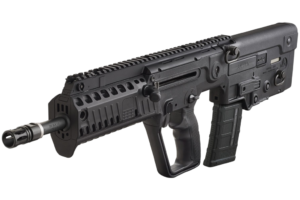
<h3 class="wp-block-heading"><strong>5. IWI Tavor X95 — Israel (Israel Weapon Industries)</strong></h3>
<div class="wp-block-image">
<figure data-spectra-id="spectra-mq939haz-edu2ig" class="alignright size-medium is-resized"><img src="https://nationnotifier.com/wp-content/uploads/2026/06/iwi-tavor-x95-bullpup-300x200.png" alt="IWI Tavor X95 bullpup assault rifle" class="wp-image-4203" /></figure>
</div>
<p>The IWI Tavor X95 is the primary service rifle of the Israel Defense Forces (IDF) and represents Israel’s decades-long commitment to the bullpup rifle configuration. The X95 (also designated Micro Tavor or MTAR-21) was designed to provide the full ballistic performance of a standard assault rifle in a dramatically more compact package — a critical requirement for infantry and armoured unit crewmen operating in the close confines of the Gaza Strip, urban terrain, and armoured vehicle interiors. It has since been adopted by several other military and special operations forces globally.</p>
<h4 class="wp-block-heading"><strong>Technical Specifications</strong></h4>
<figure class="wp-block-table"><table class="has-fixed-layout"><tbody><tr><td><strong>Specification</strong></td><td><strong>Details</strong></td></tr><tr><td>Manufacturer</td><td>Israel Weapon Industries (IWI), Israel</td></tr><tr><td>Calibre</td><td>5.56×45mm NATO (primary) / 9×19mm Parabellum / 5.45×39mm</td></tr><tr><td>Operating System</td><td>Gas-operated, rotating bolt (bullpup configuration)</td></tr><tr><td>Barrel Length</td><td>13 in (standard X95)</td></tr><tr><td>Overall Length</td><td>590 mm (same length as an M4A1 with collapsed stock — with a full-length barrel)</td></tr><tr><td>Weight (unloaded)</td><td>2.95 kg</td></tr><tr><td>Effective Range</td><td>400–500 m</td></tr><tr><td>Rate of Fire</td><td>750–900 RPM</td></tr><tr><td>Magazine Capacity</td><td>30 rounds (STANAG compatible)</td></tr><tr><td>Rail System</td><td>Picatinny top rail and optional side/bottom rails</td></tr><tr><td>Countries in Service</td><td>Israel (IDF standard issue), India (NSG, special forces), Thailand, Georgia, Ukraine (limited), others</td></tr></tbody></table></figure>
<h4 class="wp-block-heading"><strong>Military Adoption</strong></h4>
<p>The Tavor X95 is the standard rifle of the IDF, replacing the M16/M4 series in the majority of combat roles. India’s National Security Guard (NSG) counter-terrorism force fields the X95. It has also been adopted by special operations units in multiple countries and is commercially available in several markets where it has been evaluated by military and law enforcement agencies.</p>
<h4 class="wp-block-heading"><strong>Strengths and Weaknesses</strong></h4>
<p><strong>Strengths</strong></p>
<ul class="wp-block-list">
<li>Exceptional compactness — full-length barrel in a package shorter than a carbine, critical advantage in urban combat and vehicle operations</li>
<li>Extremely lightweight — among the lightest combat-proven bullpup rifles in service</li>
<li>Proven in the most sustained and intensive urban combat environment in the world — Gaza, West Bank, and counter-terrorism operations</li>
<li>Excellent reliability — IDF feedback across decades of real-world use has refined the platform</li>
<li>Calibre-conversion capability between 5.56, 9mm, and 5.45×39mm without major gunsmithing</li>
</ul>
<p><strong>Weaknesses</strong></p>
<ul class="wp-block-list">
<li>Bullpup configuration places the trigger mechanism far forward of the action — this creates a mechanical disadvantage that typically results in a longer, less crisp trigger pull compared to conventional designs</li>
<li>Ejection port is close to the shooter’s face — left-handed shooting requires modification or creates a brass ejection hazard</li>
<li>Less intuitive magazine changes in bullpup configuration under stress compared to conventional layouts</li>
<li>Limited adoption outside Israel — smaller logistics and support network than NATO-standard platforms</li>
</ul>
<h4 class="wp-block-heading"><strong>Combat Record</strong></h4>
<p>The Tavor’s combat record is arguably the most sustained and intense of any rifle on this list in terms of frequency of contact with a determined, entrenched adversary. IDF operations in Gaza, the West Bank, and Lebanon since the early 2000s have provided continuous operational evaluation. The X95’s performance during Operation Cast Lead, Operation Protective Edge, and Operation Iron Swords (2023-2024) in dense urban terrain confirms its effectiveness for the specific environments in which Israel primarily operates.</p>
<h4 class="wp-block-heading"><strong>Expert Analysis</strong></h4>
<p>The Tavor X95 is the definitive argument for the bullpup configuration in modern warfare. No other rifle delivers the combination of full-length barrel ballistics and extreme compactness as effectively. Its placement at number five on this list is not a reflection of any deficiency in its performance within its design parameters — it excels at exactly what it was designed to do. Rather, it reflects the trade-offs inherent in the bullpup concept (trigger feel, ambidextrous operation, reload speed under stress) that have caused most major militaries to retain conventional designs. For urban warfare and armoured warfare specifically, the X95 is arguably the best assault rifle in the world. For general-purpose infantry in open terrain, conventional designs retain advantages.</p>
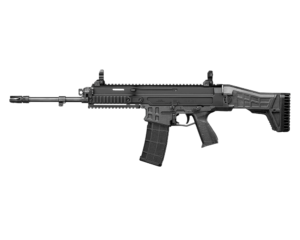
<h3 class="wp-block-heading"><strong>6. CZ Bren 2 — Czech Republic (Ceska Zbrojovka)</strong></h3>
<div class="wp-block-image">
<figure data-spectra-id="spectra-mq93aiqv-zluyon" class="alignright size-medium is-resized"><img src="https://nationnotifier.com/wp-content/uploads/2026/06/cz-bren-2-assault-rifle-300x240.webp" alt="CZ Bren 2 assault rifle Czech military rifle" class="wp-image-4204" /></figure>
</div>
<p>The CZ Bren 2 is the Czech defence industry’s most successful modern export, and one of the most technically accomplished assault rifle designs of the past decade. Developed by Ceska Zbrojovka (CZ) as a replacement for the Sa vz. 58 in Czech Armed Forces service, the Bren 2 combines exceptional manufacturing quality with a highly modular design available in multiple calibres and configurations. It has attracted significant interest from NATO-aligned special operations forces due to its accuracy, ergonomics, and reliability — at a price point below the HK416.</p>
<h4 class="wp-block-heading"><strong>Technical Specifications</strong></h4>
<figure class="wp-block-table"><table class="has-fixed-layout"><tbody><tr><td><strong>Specification</strong></td><td><strong>Details</strong></td></tr><tr><td>Manufacturer</td><td>Ceska Zbrojovka (CZ), Czech Republic</td></tr><tr><td>Calibre</td><td>5.56×45mm NATO / 7.62×39mm / 7.62×51mm NATO (variant-dependent)</td></tr><tr><td>Operating System</td><td>Short-stroke gas piston, rotating bolt</td></tr><tr><td>Barrel Length</td><td>11 in (SB), 14 in (MS), 16 in (standard), 18 in (LB)</td></tr><tr><td>Overall Length</td><td>610–883 mm (adjustable folding stock)</td></tr><tr><td>Weight (unloaded)</td><td>2.9 kg (5.56mm MS variant) — among the lightest in class</td></tr><tr><td>Effective Range</td><td>400 m (5.56mm), 600 m (7.62×51mm)</td></tr><tr><td>Rate of Fire</td><td>740 RPM (cyclic)</td></tr><tr><td>Magazine Capacity</td><td>30 rounds (STANAG, 5.56mm), 20–25 rounds (7.62mm variants)</td></tr><tr><td>Rail System</td><td>M-LOK handguard (standard), Picatinny top rail</td></tr><tr><td>Countries in Service</td><td>Czech Republic, Slovakia, special operations units in multiple NATO states</td></tr></tbody></table></figure>
<h4 class="wp-block-heading"><strong>Military Adoption</strong></h4>
<p>The CZ Bren 2 is the standard service rifle of the Czech Armed Forces. It has been adopted by the Slovak Army and has attracted significant interest from NATO SOF units across Europe who have evaluated it as a potential HK416 alternative. Several European special operations commands have procured the platform in small numbers for evaluation and limited operational use, with some transitioning to broader adoption.</p>
<h4 class="wp-block-heading"><strong>Strengths and Weaknesses</strong></h4>
<p><strong>Strengths</strong></p>
<ul class="wp-block-list">
<li>Exceptional accuracy — the Bren 2 consistently outperforms competitors in independent accuracy testing, with sub-2 MOA groups achievable with quality ammunition</li>
<li>Outstanding weight-to-capability ratio — one of the lightest rifles in its class while maintaining full barrel length and accuracy</li>
<li>Superior manufacturing quality and tight tolerances — befitting of Czech precision engineering heritage</li>
<li>Highly modular across calibres and barrel lengths with quick-change capability</li>
<li>Competitive unit cost relative to HK416 — provides NATO interoperability at lower acquisition cost</li>
</ul>
<p><strong>Weaknesses</strong></p>
<ul class="wp-block-list">
<li>Limited global combat record compared to HK416 and SCAR — fewer confirmed large-scale combat deployments</li>
<li>Smaller global support and logistics network than HK416 or Colt/FN products</li>
<li>Folding stock mechanism, while effective, has been cited as less robust than solid stocks under extended hard-use conditions</li>
<li>Market penetration limited by the dominance of established NATO-standard platforms</li>
</ul>
<h4 class="wp-block-heading"><strong>Combat Record</strong></h4>
<p>The CZ Bren 2’s combat record is growing but remains more limited than the established platforms on this list. Czech Special Forces (601st Special Forces Group) have deployed the Bren 2 in operational settings, and early operational feedback has been strongly positive. As adoption among European SOF units increases, the combat record will develop. Its technical qualities suggest it will perform exceptionally well when given the operational exposure of a wider deployment.</p>
<h4 class="wp-block-heading"><strong>Expert Analysis</strong></h4>
<p>The CZ Bren 2 is perhaps the most underappreciated military rifle in the world today. In independent technical evaluations, it consistently matches or exceeds the HK416 in accuracy, matches it in reliability, and does so at a lower weight and competitive cost. Its placement at number six reflects its more limited global military adoption and combat record — not any deficiency in the weapon itself. As European militaries recapitalise their small arms inventories in the post-2022 security environment, the Bren 2 is well-positioned to challenge established platforms for a larger share of NATO-aligned procurement. Analysts watching European defence procurement should consider the Bren 2 a major platform to watch through 2026 and beyond.</p>
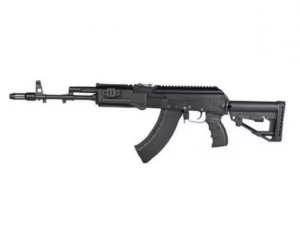
<h2 class="wp-block-heading"><strong>Made in India Spotlight — AK-203 Assault Rifle</strong></h2>
<p>SPECIAL FEATURE: INDIA’S STRATEGIC SMALL ARMS PROGRAMME</p>
<div class="wp-block-image">
<figure data-spectra-id="spectra-mq93ehfl-4wmu6t" class="alignright size-medium is-resized"><img src="https://nationnotifier.com/wp-content/uploads/2026/06/AK-203-Indo-Russian-joint-venture-assault-rifle-India-300x225.avif" alt="AK-203 Indo-Russian joint venture assault rifle India" class="wp-image-4205" /></figure>
</div>
<p>The AK-203 represents one of the most strategically significant small arms procurement decisions in India’s defence history. Far more than a simple rifle acquisition, it is the cornerstone of India’s effort to reduce dependence on imported small arms, build domestic ammunition and rifle manufacturing capability, and deliver a modernised, combat-proven platform to the Indian Army’s infantry.</p>
<h3 class="wp-block-heading"><strong>Why the AK-203 Matters in 2026</strong></h3>
<ul class="wp-block-list">
<li>India’s Indian Army still operated ageing INSAS rifles prior to this programme — a platform that had accumulated documented reliability criticisms over decades of operational use in Jammu & Kashmir, the Northeast, and against Naxal forces</li>
<li>The AK-203 replaces the INSAS with a modern, Kalashnikov-pedigree platform manufactured domestically under the Atmanirbhar Bharat (Self-Reliant India) defence initiative</li>
<li>Over 670,000 AK-203 rifles are contracted for manufacture at the Indo-Russian Rifles Private Limited (IRRPL) facility in Amethi, Uttar Pradesh — one of the largest single rifle orders in the world</li>
<li>The programme transfers manufacturing technology to India, building long-term domestic defence industrial capacity</li>
<li>The AK-203 gives the Indian Army a rifle that is immediately familiar to generations of soldiers trained on AK-pattern weapons, reducing the training transition burden</li>
</ul>
<h3 class="wp-block-heading"><strong>Technical Specifications — AK-203</strong></h3>
<figure class="wp-block-table"><table class="has-fixed-layout"><tbody><tr><td><strong>Specification</strong></td><td><strong>Details</strong></td></tr><tr><td>Full Designation</td><td>AK-203 (Avtomat Kalashnikova modernised)</td></tr><tr><td>Manufacturer</td><td>Indo-Russian Rifles Private Limited (IRRPL), Amethi, Uttar Pradesh, India</td></tr><tr><td>Parent Design</td><td>Kalashnikov Concern, Russia (licensed production)</td></tr><tr><td>Calibre</td><td>7.62×39mm</td></tr><tr><td>Operating System</td><td>Long-stroke gas piston, rotating bolt</td></tr><tr><td>Barrel Length</td><td>415 mm</td></tr><tr><td>Overall Length</td><td>880 mm / 586 mm (folding stock)</td></tr><tr><td>Weight (unloaded)</td><td>3.8 kg</td></tr><tr><td>Effective Range</td><td>300–400 m (point target)</td></tr><tr><td>Rate of Fire</td><td>700 RPM (cyclic)</td></tr><tr><td>Magazine Capacity</td><td>30 rounds</td></tr><tr><td>Rail System</td><td>Picatinny top rail for optics, side and bottom rails</td></tr><tr><td>Muzzle Device</td><td>Suppressor-compatible muzzle thread</td></tr><tr><td>India Contract Volume</td><td>670,000+ rifles for Indian Army</td></tr><tr><td>Production Facility</td><td>Amethi, Uttar Pradesh (IRRPL Joint Venture)</td></tr></tbody></table></figure>
<h3 class="wp-block-heading"><strong>Indian Army Deployment</strong></h3>
<p>The AK-203 induction into the Indian Army is one of the largest and fastest small arms recapitalisation programmes in the world in the 2022-2026 period. Initial deliveries began in 2022, with production ramping up significantly through 2023 and 2024. Infantry battalions assigned to counter-insurgency operations, mountain warfare (including along the Line of Actual Control with China), and counter-terrorism roles are priority recipients.</p>
<p>The Indian Army’s choice of 7.62×39mm for the AK-203 — rather than 5.56×45mm NATO — reflects a deliberate calibre philosophy. The 7.62×39mm cartridge provides better penetration against cover and barriers commonly encountered in sub-continental operational environments, and aligns with India’s established ammunition production infrastructure for the AK family of weapons.</p>
<h3 class="wp-block-heading"><strong>Strengths and Future Potential</strong></h3>
<p><strong>Strengths</strong></p>
<ul class="wp-block-list">
<li>Proven Kalashnikov reliability — the AK-203’s long-stroke gas piston system is among the most reliable operating mechanisms in military small arms history</li>
<li>Domestic manufacture at Amethi builds India’s defence industrial capability and reduces foreign exchange dependency for small arms</li>
<li>7.62×39mm provides superior barrier penetration compared to 5.56mm — aligned with Indian Army operational experience</li>
<li>Large-scale induction (670,000+) ensures standardisation across infantry units, simplifying logistics and maintenance</li>
<li>Picatinny rail enables integration of modern optics, red-dot sights, and NVG-compatible equipment</li>
<li>Supports Atmanirbhar Bharat initiative — strategic objective beyond purely military value</li>
</ul>
<p><strong>Weaknesses</strong></p>
<ul class="wp-block-list">
<li>7.62×39mm is not NATO-standard, creating interoperability limitations in multinational operations</li>
<li>Not as ergonomically advanced as the HK416 A8 or CZ Bren 2 in terms of rail systems and modularity</li>
<li>The AK-203 is a proven, reliable design — but it is not a frontier technological development; it does not represent a leap in lethality or future-soldier system integration comparable to the XM7</li>
<li>India’s indigenous future assault rifle programme (Ugram) is still maturing — the AK-203 is a bridge solution, not a permanent answer</li>
</ul>
<h3 class="wp-block-heading"><strong>Expert Defence Analysis</strong></h3>
<p>The AK-203 programme is a pragmatic and strategically sound decision for the Indian Army in 2026. It solves three problems simultaneously: replacing a problematic legacy rifle (INSAS), building domestic manufacturing capacity, and providing a proven, reliable platform with a familiar operating concept for the world’s largest standing army. The Kalashnikov operating system’s legendary reliability is particularly relevant for an army that must maintain operational effectiveness across extreme environmental diversity — from the high-altitude Ladakh frontier to the jungle terrain of the Northeast and the desert terrain of Rajasthan.</p>
<p>The strategic significance of the Amethi production facility extends beyond this specific order. India has demonstrated that it can manufacture a world-class military rifle domestically. This capability, once established, creates the foundation for future indigenous designs — most notably the Ugram assault rifle, which represents India’s attempt to develop a fully indigenous next-generation platform. The AK-203 is not India’s final answer in small arms — it is the bridge that funds, trains, and sustains the workforce that will ultimately produce India’s own designs.</p>
<h2 class="wp-block-heading"><strong>Comparison Table — All 6 Assault Rifles (2026)</strong></h2>
<figure class="wp-block-table"><table class="has-fixed-layout"><tbody><tr><td><strong>Rifle</strong></td><td><strong>Country</strong></td><td><strong>Calibre</strong></td><td><strong>Eff. Range</strong></td><td><strong>Weight</strong></td><td><strong>Military Adoption</strong></td><td><strong>SOF Use</strong></td></tr><tr><td>HK416 A8</td><td>Germany</td><td>5.56×45mm NATO</td><td>400–500 m</td><td>3.6 kg</td><td>France, Norway, NATO SOF</td><td>Extensive — DEVGRU, Delta</td></tr><tr><td>SIG MCX Spear (XM7)</td><td>USA</td><td>6.8×51mm</td><td>500–600 m</td><td>3.97 kg</td><td>US Army (fielding)</td><td>Limited — early stage</td></tr><tr><td>AK-12</td><td>Russia</td><td>5.45×39mm</td><td>400–800 m</td><td>3.5 kg</td><td>Russia, CIS states</td><td>Russian SOF</td></tr><tr><td>FN SCAR (Mk 16/17)</td><td>Belgium</td><td>5.56/7.62 NATO</td><td>300–800 m</td><td>3.29 kg</td><td>USA SOCOM, Belgium, Poland</td><td>Extensive — SOCOM 15+ yrs</td></tr><tr><td>IWI Tavor X95</td><td>Israel</td><td>5.56×45mm NATO</td><td>400–500 m</td><td>2.95 kg</td><td>Israel (IDF), India (NSG)</td><td>IDF — all units</td></tr><tr><td>CZ Bren 2</td><td>Czech Republic</td><td>5.56/7.62 multi</td><td>400–600 m</td><td>2.9 kg</td><td>Czech Republic, Slovakia</td><td>Czech SOF, Eur. SOF eval.</td></tr></tbody></table></figure>
<h2 class="wp-block-heading"><strong>Which Assault Rifle Stands Out in 2026?</strong></h2>
<h3 class="wp-block-heading"><strong>Best Overall Rifle</strong></h3>
<p>HK416 A8. The combination of proven combat record, broad NATO adoption, exceptional reliability, and mature support ecosystem makes the HK416 the most comprehensively excellent assault rifle in service. No other platform matches its combination of technical quality and operational validation.</p>
<h3 class="wp-block-heading"><strong>Best Special Forces Rifle</strong></h3>
<p>FN SCAR (specifically the SCAR-H / Mk 17). For special operations forces requiring a single platform that can cover CQB through extended-range designated marksman roles in multiple calibres, the SCAR-H remains unmatched. US SOCOM’s continued use after 15+ years of combat is the strongest possible endorsement.</p>
<h3 class="wp-block-heading"><strong>Best Conventional Army Rifle</strong></h3>
<p>AK-12 (for Russian-aligned forces) and HK416 A8 (for NATO forces). For large conventional armies with global logistical networks, these two platforms represent the optimum balance of reliability, availability of ammunition and parts, and tactical effectiveness.</p>
<h3 class="wp-block-heading"><strong>Best Bullpup Design</strong></h3>
<p>IWI Tavor X95. No other bullpup in active military service matches the X95’s combination of compactness, proven reliability, and sustained combat record. It defines what a modern military bullpup should be.</p>
<h3 class="wp-block-heading"><strong>Best Future-Ready Platform</strong></h3>
<p>SIG MCX Spear (XM7). The XM7’s integration with the US Army’s Integrated Visual Augmentation System (IVAS), its new cartridge, and its design philosophy around networked warfare give it the strongest claim to future-readiness — if the programme’s weight and logistics challenges can be managed.</p>
<h2 class="wp-block-heading"><strong>The Future of Assault Rifles — Key Trends to 2030</strong></h2>
<h3 class="wp-block-heading"><strong>Smart Optics and Integrated Fire Control</strong></h3>
<p>The fire control system is becoming as important as the rifle itself. Systems like the Vortex AMG UH-1 and the Elbit Falcon (used with the XM7) incorporate ballistic computers, wind sensors, and ranging into the optic package. Within five years, smart optics capable of target designation, range finding, and aim-point correction are expected to become standard in major military procurement programmes.</p>
<h3 class="wp-block-heading"><strong>Suppressor Integration</strong></h3>
<p>Suppressor integration is transitioning from a special forces luxury to a standard infantry requirement. The US Army’s fielding of suppressors with the XM7 as standard equipment signals a doctrinal shift that other NATO armies are watching closely. Sweden, Norway, and several Baltic states are moving toward mandatory suppressor fitment for infantry units. The noise signature reduction, flash reduction, and communications improvement that suppressors provide are increasingly understood as tactical necessities rather than optional accessories.</p>
<h3 class="wp-block-heading"><strong>Lightweight Materials and Additive Manufacturing</strong></h3>
<p>Carbon fibre, polymer composites, and advanced aluminium alloys are reducing rifle weights without sacrificing strength. Additive manufacturing (3D printing) is being integrated into forward maintenance and rapid prototyping, enabling field modification of handguard components and accessory mounts. By 2030, rifle components manufactured additively at forward operating bases will be a routine capability in well-resourced military forces.</p>
<h3 class="wp-block-heading"><strong>AI-Assisted Targeting</strong></h3>
<p>Computer vision and artificial intelligence are beginning to enter the fire control system. DARPA and several European defence laboratories are developing systems that can identify targets, calculate firing solutions, and provide the operator with aim-point recommendations in real time. While full autonomous engagement is not the objective — and is prohibited under international norms — AI-assisted target acquisition and fire control is projected to significantly improve first-round hit probability at extended ranges.</p>
<h3 class="wp-block-heading"><strong>Next-Generation Ammunition</strong></h3>
<p>The US Army’s 6.8×51mm programme has reopened the calibre debate that has been largely closed since NATO standardised on 5.56×45mm in the 1980s. Polymer-cased ammunition (PCA) and telescoped ammunition (LSAT programme) promise dramatic weight savings in the infantry’s ammunition load. Programmable ammunition — rounds that can be set to detonate at specific distances — is also under development for squad-level anti-personnel applications. The next major NATO calibre decision could reshape the entire small arms market by 2030.</p>
<h3 class="wp-block-heading"><strong>Networked Soldier Systems</strong></h3>
<p>The assault rifle is no longer a standalone weapon — it is a node in a networked battlespace. Programmes like the US Army’s IVAS (Integrated Visual Augmentation System), the French FELIN, the UK’s AUSA programme, and India’s F-INSAS all aim to connect the individual soldier’s weapon, sensors, communications, and situational awareness into a coherent combat system. Future assault rifles will be designed from the outset to interface with helmet-mounted displays, body-worn sensors, and drone feeds. The XM7’s compatibility with IVAS is the first mature example of this integration at scale.</p>
<h2 class="wp-block-heading"><strong>Frequently Asked Questions (FAQ)</strong></h2>
<h3 class="wp-block-heading"><strong>Which is the best assault rifle in the world in 2026?</strong></h3>
<p>Based on a combination of combat record, military adoption, reliability, and technical performance, the HK416 A8 by Heckler & Koch is ranked as the best overall assault rifle in the world in 2026. It is the preferred rifle of multiple NATO special operations forces and the standard service rifle of France and Norway.</p>
<h3 class="wp-block-heading"><strong>What rifle do NATO special forces prefer?</strong></h3>
<p>NATO special operations forces use a range of platforms, but the HK416 and FN SCAR series are the most widely used. The HK416 is the primary rifle of DEVGRU (US Navy SEALs Tier 1), Delta Force, and multiple European SOF commands. The FN SCAR-H (Mk 17) is extensively used by US SOCOM for missions requiring 7.62×51mm capability.</p>
<h3 class="wp-block-heading"><strong>Is the SIG MCX Spear (XM7) replacing the M4?</strong></h3>
<p>Yes — the XM7 (now officially designated M7) is being progressively fielded to replace the M4A1 as the US Army’s standard infantry rifle. However, fielding is phased, and the M4A1 will remain in service in significant numbers through the late 2020s. The M4A1 is also likely to remain in service with units not prioritised for XM7 fielding and with other US military branches.</p>
<h3 class="wp-block-heading"><strong>Why is the HK416 so popular among elite units?</strong></h3>
<p>The HK416’s short-stroke gas piston system provides significantly greater reliability than the M4A1’s direct impingement system, particularly when firing suppressed or under adverse environmental conditions. Its modular design, excellent ergonomics, and proven performance across multiple combat theatres have made it the benchmark for elite military units worldwide.</p>
<h3 class="wp-block-heading"><strong>Which assault rifle has the best reliability?</strong></h3>
<p>The AK-12 and HK416 A8 are generally assessed as the most reliable assault rifles in service, with different reliability profiles. The AK-12’s long-stroke piston system is extraordinarily tolerant of fouling and adverse conditions — reflecting the Kalashnikov design’s legendary durability. The HK416’s short-stroke piston system provides superior reliability over direct impingement designs while maintaining tighter tolerances and accuracy than the AK family.</p>
<h3 class="wp-block-heading"><strong>What is India’s best assault rifle in 2026?</strong></h3>
<p>In terms of currently fielded and inducting weapons, the AK-203 manufactured at Amethi, Uttar Pradesh under the Indo-Russian Rifles Private Limited joint venture is India’s best assault rifle in 2026. It combines proven Kalashnikov reliability with domestic manufacture. The indigenous Ugram assault rifle is in user trials and represents India’s future indigenously-designed platform.</p>
<h3 class="wp-block-heading"><strong>Is the AK-203 made in India?</strong></h3>
<p>Yes. The AK-203 is manufactured in India at the Indo-Russian Rifles Private Limited (IRRPL) facility in Amethi, Uttar Pradesh, under a licensed production agreement between India and Russia. The programme includes technology transfer, and the rifles are produced with increasing indigenisation content. Over 670,000 AK-203 rifles are contracted for the Indian Army under this programme.</p>
<h3 class="wp-block-heading"><strong>What is the future of military assault rifles?</strong></h3>
<p>The future of military assault rifles lies at the intersection of smart optics, networked soldier systems, advanced materials, and potentially new calibres. The US Army’s NGSW programme (XM7/M7) represents the most comprehensive redefinition of infantry rifle requirements since the 1960s. Key trends include mandatory suppressor integration, AI-assisted fire control, compatibility with helmet-mounted display systems, and lighter ammunition through polymer or telescoped cartridge technology. By 2030, the rifle will be one component of an integrated soldier combat system rather than a standalone weapon.</p>
<p></p>
<p>See more about<br><a href="https://nationnotifier.com/ground-radars-of-the-world/" data-type="post" data-id="4186">8 Most Powerful Ground Radars of the World</a><br><a href="https://nationnotifier.com/global-strike-capability-icbm-missiles/" data-type="post" data-id="4182">7 Brutal Truths About Global Strike Capability: How ICBMs Can Hit Any Target on Earth</a><br><a href="https://nationnotifier.com/7-deadliest-india-made-missiles-indigenous-defense/" data-type="post" data-id="4034">7 Deadliest India Made Missiles You Should Know</a></p>
Assault rifles remain the cornerstone of modern ground combat. In 2026, militaries worldwide are re-evaluating their small arms inventories — driven by lessons learned from high-intensity conflicts in Ukraine, the Middle East, and across the Indo-Pacific strategic theatre. The result is a new generation of rifles that must balance lethality, reliability, modularity, and compatibility with next-generation soldier systems.
This analysis ranks the six most combat-relevant and militarily significant assault rifles in the world today. The ranking is based on actual military adoption, documented battlefield performance, technical specifications, and analyst assessments — not manufacturer marketing. A special ‘Made in India’ spotlight examines the AK-203, which represents India’s most significant small arms induction programme in decades.
1. HK416 A8 — Germany (Heckler & Koch)
The HK416 has been the benchmark assault rifle for elite military units worldwide since the mid-2000s, when it gained prominence after its use in high-profile special operations. The A8 variant, introduced in the early 2020s, represents the most refined iteration of this platform — optimised for both conventional infantry and special operations forces (SOF) use. It is the primary service rifle of the French Army, Norwegian Armed Forces, and is extensively used by special operations units across the NATO alliance.
Technical Specifications
Specification
Details
Manufacturer
Heckler & Koch, Germany
Calibre
5.56×45mm NATO
Operating System
Short-stroke gas piston
Barrel Length
14.5 in (standard), variants available
Overall Length
690–970 mm (adjustable)
Weight (unloaded)
3.6 kg
Effective Range
400–500 m (point target), 800 m (area target)
Rate of Fire
700–900 RPM (cyclic)
Magazine Capacity
30 rounds (STANAG compatible)
Rail System
M-LOK / Picatinny (MIL-STD-1913)
Suppressor Ready
Yes — integral suppressor compatibility
Countries in Service
France, Norway, Germany (KSK), USA (DEVGRU/Delta), multiple NATO SOF units
Military Adoption
The HK416 is the standard infantry rifle of the French Army (replacing the FAMAS) and the Norwegian Armed Forces. It is the preferred primary weapon of US Naval Special Warfare Development Group (DEVGRU) and 1st Special Forces Operational Detachment-Delta (Delta Force). Multiple European special operations commands also field the HK416 as their primary or secondary assault rifle.
Strengths and Weaknesses
Strengths
Short-stroke gas piston system significantly reduces fouling in the action, increasing reliability
Extensively combat-proven across multiple theatres including Afghanistan, Iraq, Syria, Mali, and Sahel
Superior reliability compared to DI (direct impingement) systems in adverse conditions
Modular design accommodates barrel length changes without specialist tools
Strong optics ecosystem — compatible with all NATO-standard fire control systems
Adopted by Tier 1 SOF units widely regarded as the most demanding users of small arms
Weaknesses
Heavier than comparable DI-system rifles due to the piston mechanism
Higher unit cost compared to M4A1 and AK-pattern rifles
Short-stroke piston can cause carrier tilt under extreme conditions if not maintained
5.56mm NATO calibre faces growing scrutiny in near-peer conflict scenarios requiring greater terminal effect
Combat Record
The HK416’s combat record is exceptional by any analytical standard. It achieved global attention when it was confirmed as the weapon used during Operation Neptune Spear (2011). French forces have relied on it extensively during Operation Barkhane in the Sahel, and Norwegian Special Operations Forces have deployed it across multiple UN and NATO-mandated missions. No other rifle in the 5.56mm class has a comparable record of sustained SOF use across diverse operational environments.
Expert Analysis
The HK416 A8 is the gold standard of modern assault rifles — not for any single specification, but for the totality of its operational performance. Its piston system gives it a decisive edge in sustained fire operations and adverse environments. The A8 variant improves upon previous generations with enhanced ergonomics, a slimmer handguard, and improved suppressor compatibility. As militaries push toward integrated soldier systems, the HK416’s mature accessory ecosystem and NATO-wide logistics support give it a structural advantage over newer entrants. If one rifle defines what a modern infantry weapon should be in 2026, the HK416 A8 is that rifle.
2. SIG MCX Spear / XM7 — USA (SIG Sauer)
The SIG MCX Spear — designated XM7 in US Army service and formally adopted as the M7 — is the most significant small arms development in the United States military in over half a century. It fires the new 6.8×51mm Common Cartridge (also known as .277 SIG Fury), which was specifically designed to defeat near-peer adversary body armour at extended ranges. The US Army’s Next Generation Squad Weapon (NGSW) programme selected the XM7 rifle and XM250 automatic rifle in 2022, and fielding is now underway with infantry brigade combat teams.
Technical Specifications
Specification
Details
Manufacturer
SIG Sauer, USA
Calibre
6.8×51mm Common Cartridge (.277 SIG Fury)
Operating System
Short-stroke gas piston, rotating bolt
Barrel Length
13 in (standard infantry)
Overall Length
711–940 mm
Weight (unloaded)
3.97 kg (heavier than M4A1)
Effective Range
500 m (point target, suppressed), 600+ m (unsuppressed)
Muzzle Velocity
~823 m/s (standard load)
Magazine Capacity
20 rounds (hybrid-case ammunition)
Rail System
Picatinny / M-LOK
Suppressor
Integrated suppressor as standard issue
Countries in Service
USA (primary infantry units, ongoing fielding)
Military Adoption
The XM7 (now M7) is entering service with US Army infantry units as part of the NGSW programme. It is designed to replace the M4A1 carbine and M249 SAW (Squad Automatic Weapon) in close combat roles. Given US influence on NATO procurement, several allied nations are closely evaluating the platform. The 6.8×51mm cartridge is being proposed as a future NATO standard, which would drive broader adoption if accepted.
Strengths and Weaknesses
Strengths
6.8×51mm cartridge defeats Level IV body armour at standard infantry engagement ranges — a significant leap over 5.56mm
Designed from the outset to interface with the Integrated Visual Augmentation System (IVAS) — a leap in future soldier compatibility
Hybrid steel-brass cartridge case provides superior chamber pressure management
Short-stroke piston system provides superior reliability over the legacy M4A1 direct impingement
Weaknesses
Weight penalty is significant — the M7 with a loaded 20-round magazine is substantially heavier than an M4A1 with 30 rounds
Ammunition cost and logistical complexity of 6.8×51mm remain serious programme concerns
20-round magazine capacity reduces suppressive fire effectiveness compared to 30-round STANAG
NATO interoperability issues — non-standard calibre creates resupply complications in coalition operations
Fielding remains limited in 2026 — combat record is minimal compared to legacy platforms
Combat Record
The XM7/M7 is still in early fielding as of 2026, with limited deployments. Initial reports from units that have received the rifle indicate strong performance in range evaluation and training scenarios, but meaningful battlefield data is not yet available. The platform’s potential is significant, but its ultimate battlefield record remains to be written.
Expert Analysis
The SIG MCX Spear/XM7 represents a paradigm shift rather than an incremental improvement. The decision to change calibre after 60 years of 5.56mm dominance reflects hard lessons from analysis of potential near-peer conflicts — where body armour capable of defeating standard NATO rifle rounds is increasingly prevalent. The 6.8×51mm cartridge’s ability to defeat modern ceramic plate armour at combat distances addresses a genuine operational gap. However, the weight, logistics burden, and reduced magazine capacity are real tactical trade-offs. In 2026, the XM7 is the most technically ambitious infantry rifle in the world — whether it is the most effective one in practice will depend on how the US Army manages those trade-offs in sustained operations.
3. AK-12 — Russia (Kalashnikov Concern)
The AK-12 is the Russian Armed Forces’ current standard-issue assault rifle, representing the most significant modernisation of the Kalashnikov platform since the AKM in the 1960s. It entered service with Russian ground forces around 2018 and has now been fielded at scale across infantry, airborne, and special operations units. The conflict in Ukraine since 2022 has provided the largest single operational evaluation of this platform in modern combat.
Technical Specifications
Specification
Details
Manufacturer
Kalashnikov Concern, Izhevsk, Russia
Calibre
5.45×39mm (primary) / 7.62×39mm (AK-15 variant)
Operating System
Long-stroke gas piston, rotating bolt
Barrel Length
415 mm
Overall Length
690–940 mm (folding/adjustable stock)
Weight (unloaded)
3.5 kg
Effective Range
400 m (point target), 800 m (area target)
Rate of Fire
700 RPM (cyclic)
Magazine Capacity
30 rounds (standard)
Rail System
Picatinny on top receiver, M-LOK compatible handguard options
Suppressor Ready
Yes
Countries in Service
Russia (primary), select CIS states, export markets
Military Adoption
The AK-12 is standard-issue for Russian ground forces, airborne troops (VDV), and naval infantry. The Rosgvardia (National Guard) also operates the platform. Export markets include several Central Asian, African, and Middle Eastern states that rely on Russian military assistance. The AK-15 variant, chambered in 7.62×39mm, is favoured by some special operations units for its superior penetration against soft-skinned vehicles and light cover.
Strengths and Weaknesses
Strengths
Legendary Kalashnikov reliability — the long-stroke piston system is exceptionally tolerant of fouling and adverse conditions
Massive global logistics network — 5.45×39mm and 7.62×39mm ammunition is among the most widely available on earth
Improved ergonomics over legacy AK-74 — folding adjustable stock, improved pistol grip, better trigger group
Picatinny rail allows integration of modern optics, LPVO scopes, and thermal sights
Combat-proven at scale in Ukraine — operational data from a high-intensity peer conflict is invaluable
Weaknesses
Ukraine combat experience has exposed vulnerabilities — Russian forces have documented reliability issues with early-production batches under sustained high-intensity use
Heavier than the HK416 and modern Western competitors
Long-stroke piston limits the precision of the trigger break compared to short-stroke competitors
5.45×39mm is not NATO-standard, limiting coalition interoperability
Manufacturing quality has been inconsistent under wartime production surge pressures
Combat Record
The AK-12 has been fielded extensively in the conflict in Ukraine, making it one of the most operationally tested rifles in the world in the period 2022-2026. Field reports from both Russian and captured-weapon evaluations indicate generally satisfactory performance, but with quality control concerns emerging from accelerated wartime production. Ukrainian forces have also captured and evaluated significant numbers of the platform, providing indirect intelligence on its performance.
Expert Analysis
The AK-12 is the latest chapter in the most successful military small arms lineage in history. The modernisation is genuine and meaningful — the ergonomics, optics compatibility, and modular handguard represent real improvements over the AK-74M. However, the Ukraine conflict has also been a stress test that has revealed the limitations of the Russian defence industrial base when operating under wartime surge conditions. The AK-12 is a reliable, effective, and globally relevant weapon system. Its placement at number three reflects the genuine quality of the platform, while acknowledging that the HK416 and XM7 represent higher levels of technical sophistication in specific areas — particularly suppressor integration and advanced optics compatibility.
4. FN SCAR-L / SCAR Series — Belgium (FN Herstal)
The FN SCAR (Special Operations Forces Combat Assault Rifle) was developed by Belgian manufacturer FN Herstal in response to a US Special Operations Command (SOCOM) requirement for a modular, multi-calibre rifle system. The SCAR-L (Light) in 5.56×45mm and SCAR-H (Heavy) in 7.62×51mm share common controls, enabling operators to switch between calibres with minimal retraining. In 2026, the SCAR series remains one of the most widely used platforms among elite military units globally.
Technical Specifications
Specification
Details
Manufacturer
FN Herstal, Belgium
Calibre
5.56×45mm NATO (SCAR-L) / 7.62×51mm NATO (SCAR-H)
Operating System
Short-stroke gas piston, rotating bolt
Barrel Length
13 in (CQC), 16 in (STD), 20 in (LB)
Overall Length
560–1000 mm (variant-dependent)
Weight (unloaded)
3.29 kg (SCAR-L STD)
Effective Range
300 m (CQC), 500 m (STD), 800 m (SCAR-H LB)
Rate of Fire
625 RPM (cyclic)
Magazine Capacity
30 rounds (SCAR-L), 20 rounds (SCAR-H)
Rail System
Full-length Picatinny top rail, M-LOK compatible
Countries in Service
USA (SOCOM, MARSOC), Belgium, Peru, Poland, Saudi Arabia, many others
Military Adoption
The SCAR is a proven SOCOM workhorse. US Army Rangers replaced the SCAR-L with the M4A1 for standard operations but retained SCAR-H (as Mk 17) for designated marksman and heavy assault roles. MARSOC and other SOCOM-aligned units continue to field both variants. Internationally, the SCAR is operated by special operations forces in Belgium, Poland, and multiple Gulf states.
Strengths and Weaknesses
Strengths
Exceptional modularity — single rifle platform covers CQB to extended-range designated marksman roles
Short-stroke gas piston provides superior reliability over DI systems in adverse conditions
Common lower receiver across calibres reduces training burden and logistics footprint for dual-calibre units
Folding stock enables compact storage for airborne, vehicle, and maritime insertion operations
Extensively combat-proven across Afghanistan, Iraq, and SOF operations globally over two decades
Weaknesses
Relatively high recoil in semi-auto precision fire compared to fixed-stock rifles — the folding stock absorbs less recoil energy
Higher unit cost than M4/M16 series — limits large-scale conventional infantry adoption
The SCAR-L lost the US Army Rangers competition to the M4A1 — indicating it is not the optimum choice for all SOF roles
Heavier than the M4A1 in equivalent configurations
Combat Record
The FN SCAR has an extensive combat record spanning over 15 years of SOF operations in Afghanistan, Iraq, Syria, West Africa, and other theatres. The SCAR-H (Mk 17) has been particularly valued for its penetration against intermediate barriers — vehicles, walls, and body armour — that present challenges to 5.56mm platforms. US SOCOM’s continued use of the platform across successive conflicts is a strong validation of its performance.
Expert Analysis
The FN SCAR remains one of the most thoughtfully designed modular rifle systems in military service. Its ability to function effectively across calibres and barrel lengths without significant handling changes is a genuine operational advantage for special operations units that must adapt quickly to changing mission profiles. The SCAR is not the lightest, the cheapest, or the newest platform on this list — but it is among the most versatile and operationally proven. In 2026, its primary role has evolved toward the heavy (7.62mm) end of the spectrum, where it faces less direct competition and where its excellent ergonomics and accuracy are most valued.
5. IWI Tavor X95 — Israel (Israel Weapon Industries)
The IWI Tavor X95 is the primary service rifle of the Israel Defense Forces (IDF) and represents Israel’s decades-long commitment to the bullpup rifle configuration. The X95 (also designated Micro Tavor or MTAR-21) was designed to provide the full ballistic performance of a standard assault rifle in a dramatically more compact package — a critical requirement for infantry and armoured unit crewmen operating in the close confines of the Gaza Strip, urban terrain, and armoured vehicle interiors. It has since been adopted by several other military and special operations forces globally.
Technical Specifications
Specification
Details
Manufacturer
Israel Weapon Industries (IWI), Israel
Calibre
5.56×45mm NATO (primary) / 9×19mm Parabellum / 5.45×39mm
590 mm (same length as an M4A1 with collapsed stock — with a full-length barrel)
Weight (unloaded)
2.95 kg
Effective Range
400–500 m
Rate of Fire
750–900 RPM
Magazine Capacity
30 rounds (STANAG compatible)
Rail System
Picatinny top rail and optional side/bottom rails
Countries in Service
Israel (IDF standard issue), India (NSG, special forces), Thailand, Georgia, Ukraine (limited), others
Military Adoption
The Tavor X95 is the standard rifle of the IDF, replacing the M16/M4 series in the majority of combat roles. India’s National Security Guard (NSG) counter-terrorism force fields the X95. It has also been adopted by special operations units in multiple countries and is commercially available in several markets where it has been evaluated by military and law enforcement agencies.
Strengths and Weaknesses
Strengths
Exceptional compactness — full-length barrel in a package shorter than a carbine, critical advantage in urban combat and vehicle operations
Extremely lightweight — among the lightest combat-proven bullpup rifles in service
Proven in the most sustained and intensive urban combat environment in the world — Gaza, West Bank, and counter-terrorism operations
Excellent reliability — IDF feedback across decades of real-world use has refined the platform
Calibre-conversion capability between 5.56, 9mm, and 5.45×39mm without major gunsmithing
Weaknesses
Bullpup configuration places the trigger mechanism far forward of the action — this creates a mechanical disadvantage that typically results in a longer, less crisp trigger pull compared to conventional designs
Ejection port is close to the shooter’s face — left-handed shooting requires modification or creates a brass ejection hazard
Less intuitive magazine changes in bullpup configuration under stress compared to conventional layouts
Limited adoption outside Israel — smaller logistics and support network than NATO-standard platforms
Combat Record
The Tavor’s combat record is arguably the most sustained and intense of any rifle on this list in terms of frequency of contact with a determined, entrenched adversary. IDF operations in Gaza, the West Bank, and Lebanon since the early 2000s have provided continuous operational evaluation. The X95’s performance during Operation Cast Lead, Operation Protective Edge, and Operation Iron Swords (2023-2024) in dense urban terrain confirms its effectiveness for the specific environments in which Israel primarily operates.
Expert Analysis
The Tavor X95 is the definitive argument for the bullpup configuration in modern warfare. No other rifle delivers the combination of full-length barrel ballistics and extreme compactness as effectively. Its placement at number five on this list is not a reflection of any deficiency in its performance within its design parameters — it excels at exactly what it was designed to do. Rather, it reflects the trade-offs inherent in the bullpup concept (trigger feel, ambidextrous operation, reload speed under stress) that have caused most major militaries to retain conventional designs. For urban warfare and armoured warfare specifically, the X95 is arguably the best assault rifle in the world. For general-purpose infantry in open terrain, conventional designs retain advantages.
6. CZ Bren 2 — Czech Republic (Ceska Zbrojovka)
The CZ Bren 2 is the Czech defence industry’s most successful modern export, and one of the most technically accomplished assault rifle designs of the past decade. Developed by Ceska Zbrojovka (CZ) as a replacement for the Sa vz. 58 in Czech Armed Forces service, the Bren 2 combines exceptional manufacturing quality with a highly modular design available in multiple calibres and configurations. It has attracted significant interest from NATO-aligned special operations forces due to its accuracy, ergonomics, and reliability — at a price point below the HK416.
Technical Specifications
Specification
Details
Manufacturer
Ceska Zbrojovka (CZ), Czech Republic
Calibre
5.56×45mm NATO / 7.62×39mm / 7.62×51mm NATO (variant-dependent)
Operating System
Short-stroke gas piston, rotating bolt
Barrel Length
11 in (SB), 14 in (MS), 16 in (standard), 18 in (LB)
Overall Length
610–883 mm (adjustable folding stock)
Weight (unloaded)
2.9 kg (5.56mm MS variant) — among the lightest in class
Czech Republic, Slovakia, special operations units in multiple NATO states
Military Adoption
The CZ Bren 2 is the standard service rifle of the Czech Armed Forces. It has been adopted by the Slovak Army and has attracted significant interest from NATO SOF units across Europe who have evaluated it as a potential HK416 alternative. Several European special operations commands have procured the platform in small numbers for evaluation and limited operational use, with some transitioning to broader adoption.
Strengths and Weaknesses
Strengths
Exceptional accuracy — the Bren 2 consistently outperforms competitors in independent accuracy testing, with sub-2 MOA groups achievable with quality ammunition
Outstanding weight-to-capability ratio — one of the lightest rifles in its class while maintaining full barrel length and accuracy
Superior manufacturing quality and tight tolerances — befitting of Czech precision engineering heritage
Highly modular across calibres and barrel lengths with quick-change capability
Competitive unit cost relative to HK416 — provides NATO interoperability at lower acquisition cost
Weaknesses
Limited global combat record compared to HK416 and SCAR — fewer confirmed large-scale combat deployments
Smaller global support and logistics network than HK416 or Colt/FN products
Folding stock mechanism, while effective, has been cited as less robust than solid stocks under extended hard-use conditions
Market penetration limited by the dominance of established NATO-standard platforms
Combat Record
The CZ Bren 2’s combat record is growing but remains more limited than the established platforms on this list. Czech Special Forces (601st Special Forces Group) have deployed the Bren 2 in operational settings, and early operational feedback has been strongly positive. As adoption among European SOF units increases, the combat record will develop. Its technical qualities suggest it will perform exceptionally well when given the operational exposure of a wider deployment.
Expert Analysis
The CZ Bren 2 is perhaps the most underappreciated military rifle in the world today. In independent technical evaluations, it consistently matches or exceeds the HK416 in accuracy, matches it in reliability, and does so at a lower weight and competitive cost. Its placement at number six reflects its more limited global military adoption and combat record — not any deficiency in the weapon itself. As European militaries recapitalise their small arms inventories in the post-2022 security environment, the Bren 2 is well-positioned to challenge established platforms for a larger share of NATO-aligned procurement. Analysts watching European defence procurement should consider the Bren 2 a major platform to watch through 2026 and beyond.
Made in India Spotlight — AK-203 Assault Rifle
SPECIAL FEATURE: INDIA’S STRATEGIC SMALL ARMS PROGRAMME
The AK-203 represents one of the most strategically significant small arms procurement decisions in India’s defence history. Far more than a simple rifle acquisition, it is the cornerstone of India’s effort to reduce dependence on imported small arms, build domestic ammunition and rifle manufacturing capability, and deliver a modernised, combat-proven platform to the Indian Army’s infantry.
Why the AK-203 Matters in 2026
India’s Indian Army still operated ageing INSAS rifles prior to this programme — a platform that had accumulated documented reliability criticisms over decades of operational use in Jammu & Kashmir, the Northeast, and against Naxal forces
The AK-203 replaces the INSAS with a modern, Kalashnikov-pedigree platform manufactured domestically under the Atmanirbhar Bharat (Self-Reliant India) defence initiative
Over 670,000 AK-203 rifles are contracted for manufacture at the Indo-Russian Rifles Private Limited (IRRPL) facility in Amethi, Uttar Pradesh — one of the largest single rifle orders in the world
The programme transfers manufacturing technology to India, building long-term domestic defence industrial capacity
The AK-203 gives the Indian Army a rifle that is immediately familiar to generations of soldiers trained on AK-pattern weapons, reducing the training transition burden
Technical Specifications — AK-203
Specification
Details
Full Designation
AK-203 (Avtomat Kalashnikova modernised)
Manufacturer
Indo-Russian Rifles Private Limited (IRRPL), Amethi, Uttar Pradesh, India
Parent Design
Kalashnikov Concern, Russia (licensed production)
Calibre
7.62×39mm
Operating System
Long-stroke gas piston, rotating bolt
Barrel Length
415 mm
Overall Length
880 mm / 586 mm (folding stock)
Weight (unloaded)
3.8 kg
Effective Range
300–400 m (point target)
Rate of Fire
700 RPM (cyclic)
Magazine Capacity
30 rounds
Rail System
Picatinny top rail for optics, side and bottom rails
Muzzle Device
Suppressor-compatible muzzle thread
India Contract Volume
670,000+ rifles for Indian Army
Production Facility
Amethi, Uttar Pradesh (IRRPL Joint Venture)
Indian Army Deployment
The AK-203 induction into the Indian Army is one of the largest and fastest small arms recapitalisation programmes in the world in the 2022-2026 period. Initial deliveries began in 2022, with production ramping up significantly through 2023 and 2024. Infantry battalions assigned to counter-insurgency operations, mountain warfare (including along the Line of Actual Control with China), and counter-terrorism roles are priority recipients.
The Indian Army’s choice of 7.62×39mm for the AK-203 — rather than 5.56×45mm NATO — reflects a deliberate calibre philosophy. The 7.62×39mm cartridge provides better penetration against cover and barriers commonly encountered in sub-continental operational environments, and aligns with India’s established ammunition production infrastructure for the AK family of weapons.
Strengths and Future Potential
Strengths
Proven Kalashnikov reliability — the AK-203’s long-stroke gas piston system is among the most reliable operating mechanisms in military small arms history
Domestic manufacture at Amethi builds India’s defence industrial capability and reduces foreign exchange dependency for small arms
7.62×39mm provides superior barrier penetration compared to 5.56mm — aligned with Indian Army operational experience
Large-scale induction (670,000+) ensures standardisation across infantry units, simplifying logistics and maintenance
Picatinny rail enables integration of modern optics, red-dot sights, and NVG-compatible equipment
Supports Atmanirbhar Bharat initiative — strategic objective beyond purely military value
Weaknesses
7.62×39mm is not NATO-standard, creating interoperability limitations in multinational operations
Not as ergonomically advanced as the HK416 A8 or CZ Bren 2 in terms of rail systems and modularity
The AK-203 is a proven, reliable design — but it is not a frontier technological development; it does not represent a leap in lethality or future-soldier system integration comparable to the XM7
India’s indigenous future assault rifle programme (Ugram) is still maturing — the AK-203 is a bridge solution, not a permanent answer
Expert Defence Analysis
The AK-203 programme is a pragmatic and strategically sound decision for the Indian Army in 2026. It solves three problems simultaneously: replacing a problematic legacy rifle (INSAS), building domestic manufacturing capacity, and providing a proven, reliable platform with a familiar operating concept for the world’s largest standing army. The Kalashnikov operating system’s legendary reliability is particularly relevant for an army that must maintain operational effectiveness across extreme environmental diversity — from the high-altitude Ladakh frontier to the jungle terrain of the Northeast and the desert terrain of Rajasthan.
The strategic significance of the Amethi production facility extends beyond this specific order. India has demonstrated that it can manufacture a world-class military rifle domestically. This capability, once established, creates the foundation for future indigenous designs — most notably the Ugram assault rifle, which represents India’s attempt to develop a fully indigenous next-generation platform. The AK-203 is not India’s final answer in small arms — it is the bridge that funds, trains, and sustains the workforce that will ultimately produce India’s own designs.
Comparison Table — All 6 Assault Rifles (2026)
Rifle
Country
Calibre
Eff. Range
Weight
Military Adoption
SOF Use
HK416 A8
Germany
5.56×45mm NATO
400–500 m
3.6 kg
France, Norway, NATO SOF
Extensive — DEVGRU, Delta
SIG MCX Spear (XM7)
USA
6.8×51mm
500–600 m
3.97 kg
US Army (fielding)
Limited — early stage
AK-12
Russia
5.45×39mm
400–800 m
3.5 kg
Russia, CIS states
Russian SOF
FN SCAR (Mk 16/17)
Belgium
5.56/7.62 NATO
300–800 m
3.29 kg
USA SOCOM, Belgium, Poland
Extensive — SOCOM 15+ yrs
IWI Tavor X95
Israel
5.56×45mm NATO
400–500 m
2.95 kg
Israel (IDF), India (NSG)
IDF — all units
CZ Bren 2
Czech Republic
5.56/7.62 multi
400–600 m
2.9 kg
Czech Republic, Slovakia
Czech SOF, Eur. SOF eval.
Which Assault Rifle Stands Out in 2026?
Best Overall Rifle
HK416 A8. The combination of proven combat record, broad NATO adoption, exceptional reliability, and mature support ecosystem makes the HK416 the most comprehensively excellent assault rifle in service. No other platform matches its combination of technical quality and operational validation.
Best Special Forces Rifle
FN SCAR (specifically the SCAR-H / Mk 17). For special operations forces requiring a single platform that can cover CQB through extended-range designated marksman roles in multiple calibres, the SCAR-H remains unmatched. US SOCOM’s continued use after 15+ years of combat is the strongest possible endorsement.
Best Conventional Army Rifle
AK-12 (for Russian-aligned forces) and HK416 A8 (for NATO forces). For large conventional armies with global logistical networks, these two platforms represent the optimum balance of reliability, availability of ammunition and parts, and tactical effectiveness.
Best Bullpup Design
IWI Tavor X95. No other bullpup in active military service matches the X95’s combination of compactness, proven reliability, and sustained combat record. It defines what a modern military bullpup should be.
Best Future-Ready Platform
SIG MCX Spear (XM7). The XM7’s integration with the US Army’s Integrated Visual Augmentation System (IVAS), its new cartridge, and its design philosophy around networked warfare give it the strongest claim to future-readiness — if the programme’s weight and logistics challenges can be managed.
The Future of Assault Rifles — Key Trends to 2030
Smart Optics and Integrated Fire Control
The fire control system is becoming as important as the rifle itself. Systems like the Vortex AMG UH-1 and the Elbit Falcon (used with the XM7) incorporate ballistic computers, wind sensors, and ranging into the optic package. Within five years, smart optics capable of target designation, range finding, and aim-point correction are expected to become standard in major military procurement programmes.
Suppressor Integration
Suppressor integration is transitioning from a special forces luxury to a standard infantry requirement. The US Army’s fielding of suppressors with the XM7 as standard equipment signals a doctrinal shift that other NATO armies are watching closely. Sweden, Norway, and several Baltic states are moving toward mandatory suppressor fitment for infantry units. The noise signature reduction, flash reduction, and communications improvement that suppressors provide are increasingly understood as tactical necessities rather than optional accessories.
Lightweight Materials and Additive Manufacturing
Carbon fibre, polymer composites, and advanced aluminium alloys are reducing rifle weights without sacrificing strength. Additive manufacturing (3D printing) is being integrated into forward maintenance and rapid prototyping, enabling field modification of handguard components and accessory mounts. By 2030, rifle components manufactured additively at forward operating bases will be a routine capability in well-resourced military forces.
AI-Assisted Targeting
Computer vision and artificial intelligence are beginning to enter the fire control system. DARPA and several European defence laboratories are developing systems that can identify targets, calculate firing solutions, and provide the operator with aim-point recommendations in real time. While full autonomous engagement is not the objective — and is prohibited under international norms — AI-assisted target acquisition and fire control is projected to significantly improve first-round hit probability at extended ranges.
Next-Generation Ammunition
The US Army’s 6.8×51mm programme has reopened the calibre debate that has been largely closed since NATO standardised on 5.56×45mm in the 1980s. Polymer-cased ammunition (PCA) and telescoped ammunition (LSAT programme) promise dramatic weight savings in the infantry’s ammunition load. Programmable ammunition — rounds that can be set to detonate at specific distances — is also under development for squad-level anti-personnel applications. The next major NATO calibre decision could reshape the entire small arms market by 2030.
Networked Soldier Systems
The assault rifle is no longer a standalone weapon — it is a node in a networked battlespace. Programmes like the US Army’s IVAS (Integrated Visual Augmentation System), the French FELIN, the UK’s AUSA programme, and India’s F-INSAS all aim to connect the individual soldier’s weapon, sensors, communications, and situational awareness into a coherent combat system. Future assault rifles will be designed from the outset to interface with helmet-mounted displays, body-worn sensors, and drone feeds. The XM7’s compatibility with IVAS is the first mature example of this integration at scale.
Frequently Asked Questions (FAQ)
Which is the best assault rifle in the world in 2026?
Based on a combination of combat record, military adoption, reliability, and technical performance, the HK416 A8 by Heckler & Koch is ranked as the best overall assault rifle in the world in 2026. It is the preferred rifle of multiple NATO special operations forces and the standard service rifle of France and Norway.
What rifle do NATO special forces prefer?
NATO special operations forces use a range of platforms, but the HK416 and FN SCAR series are the most widely used. The HK416 is the primary rifle of DEVGRU (US Navy SEALs Tier 1), Delta Force, and multiple European SOF commands. The FN SCAR-H (Mk 17) is extensively used by US SOCOM for missions requiring 7.62×51mm capability.
Is the SIG MCX Spear (XM7) replacing the M4?
Yes — the XM7 (now officially designated M7) is being progressively fielded to replace the M4A1 as the US Army’s standard infantry rifle. However, fielding is phased, and the M4A1 will remain in service in significant numbers through the late 2020s. The M4A1 is also likely to remain in service with units not prioritised for XM7 fielding and with other US military branches.
Why is the HK416 so popular among elite units?
The HK416’s short-stroke gas piston system provides significantly greater reliability than the M4A1’s direct impingement system, particularly when firing suppressed or under adverse environmental conditions. Its modular design, excellent ergonomics, and proven performance across multiple combat theatres have made it the benchmark for elite military units worldwide.
Which assault rifle has the best reliability?
The AK-12 and HK416 A8 are generally assessed as the most reliable assault rifles in service, with different reliability profiles. The AK-12’s long-stroke piston system is extraordinarily tolerant of fouling and adverse conditions — reflecting the Kalashnikov design’s legendary durability. The HK416’s short-stroke piston system provides superior reliability over direct impingement designs while maintaining tighter tolerances and accuracy than the AK family.
What is India’s best assault rifle in 2026?
In terms of currently fielded and inducting weapons, the AK-203 manufactured at Amethi, Uttar Pradesh under the Indo-Russian Rifles Private Limited joint venture is India’s best assault rifle in 2026. It combines proven Kalashnikov reliability with domestic manufacture. The indigenous Ugram assault rifle is in user trials and represents India’s future indigenously-designed platform.
Is the AK-203 made in India?
Yes. The AK-203 is manufactured in India at the Indo-Russian Rifles Private Limited (IRRPL) facility in Amethi, Uttar Pradesh, under a licensed production agreement between India and Russia. The programme includes technology transfer, and the rifles are produced with increasing indigenisation content. Over 670,000 AK-203 rifles are contracted for the Indian Army under this programme.
What is the future of military assault rifles?
The future of military assault rifles lies at the intersection of smart optics, networked soldier systems, advanced materials, and potentially new calibres. The US Army’s NGSW programme (XM7/M7) represents the most comprehensive redefinition of infantry rifle requirements since the 1960s. Key trends include mandatory suppressor integration, AI-assisted fire control, compatibility with helmet-mounted display systems, and lighter ammunition through polymer or telescoped cartridge technology. By 2030, the rifle will be one component of an integrated soldier combat system rather than a standalone weapon.