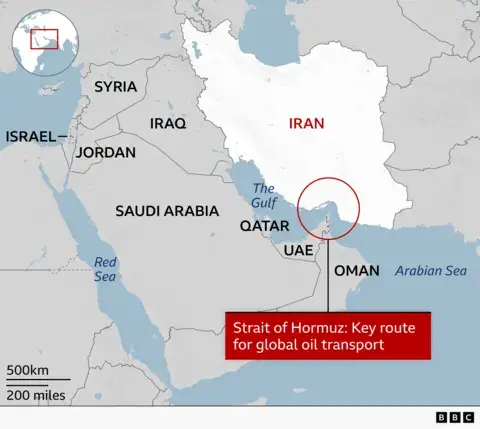
Have you noticed your fuel prices or grocery bills surging this week? The answer lies in a tiny, 21-mile-wide strip of water: the Strait of Hormuz.
As of April 15, 2026, this maritime “chokepoint” is at the heart of the most significant energy disruption in history. Here is everything you need to know about why this waterway matters to the entire world.
What is the Strait of Hormuz?
The Strait of Hormuz is a narrow waterway connecting the Persian Gulf with the Gulf of Oman and the Arabian Sea. It separates Iran to the north from Oman and the United Arab Emirates (UAE) to the south.
- The “Tight” Spot: At its narrowest, it is only 33 kilometers (21 miles) wide.
- The Shipping Lanes: To prevent collisions, tankers must stay within two-mile-wide lanes.
The 2026 Crisis: Why Is It in the News?
The Strait is currently the “front line” of the ongoing conflict involving the U.S., Israel, and Iran. Since late February 2026, maritime traffic has dropped by nearly 95%.
Current Status (April 15, 2026):
- The U.S. Blockade: On April 13, the U.S. Navy began a targeted blockade of Iranian ports while attempting to clear sea mines to allow neutral commercial traffic to resume.
- Energy Impact: Brent Crude peaked at $126 per barrel in March—the largest monthly increase ever recorded.
- Global Shortages: Over 20% of the world’s oil and Liquefied Natural Gas (LNG) passes through here. Countries like India, China, and Japan are currently facing severe supply-chain “bullwhip” effects.
Geopolitics and Defence: A Strategic Jugular
The Strait is more than just a trade route; it is a geopolitical weapon. Because the shipping lanes fall within the territorial waters of Iran and Oman, “transit passage” is governed by international law (UNCLOS).
However, in 2026, we are seeing Asymmetric Warfare in action. Iran has utilized small-boat swarms, coastal missiles, and mines to effectively halt the world’s most powerful navies. For Nation Notifier readers, this is a masterclass in how a regional power can exert global leverage.
The Bottom Line
The Strait of Hormuz is the “windpipe” of the global economy. When it is squeezed, the whole world feels the pressure—from the gas stations in Europe to the food markets in the GCC.
What do you think? Will the U.S. mine-clearing operations succeed in reopening the Strait this week, or are we entering a permanent era of high energy costs? Let us know in the comments.
see more about
The Peace Broker: How Pakistan’s Field Marshal is Steering US-Iran Talks Amid Regional War
Iran War 2026 Explained: Timeline, Drone Attacks, Strait of Hormuz Crisis & Global Impact