Introduction
North Korea and South Korea were not always enemies. In fact, they were once a single country with shared culture, language, and history. So why do they seem so hostile toward each other today?
The answer is not simple. It involves history, war, global politics, and deep ideological differences. Let’s break it down in an easy-to-understand way.
1. Korea Was Once One Country
For hundreds of years, Korea was united under one rule. People lived as one nation, sharing traditions and identity. There was no concept of “North” or “South.”
2. Japanese Occupation (1910–1945)
In 1910, Japan took control of Korea. This period was very difficult for Koreans:
- Their culture was suppressed
- Freedom was limited
- Many people suffered under colonial rule
This created a strong desire for independence among Koreans.
3. Division After World War II
When World War II ended in 1945, Japan lost control of Korea. But instead of becoming one country again, Korea was divided:
- The northern part was controlled by the Soviet Union
- The southern part was controlled by the United States
This division was meant to be temporary, but it didn’t turn out that way.
4. Two Different Systems and Ideologies
By 1948, two separate governments were formed:
- North Korea: Communist system, strict government control
- South Korea: Capitalist system, more freedom and democracy
Both sides believed they were the rightful government of all Korea. This created strong rivalry and mistrust.
5. The Korean War (1950–1953)
This was the turning point.
North Korea invaded South Korea in 1950, starting a brutal war:
- Millions of people died
- Cities were destroyed
- Families were separated
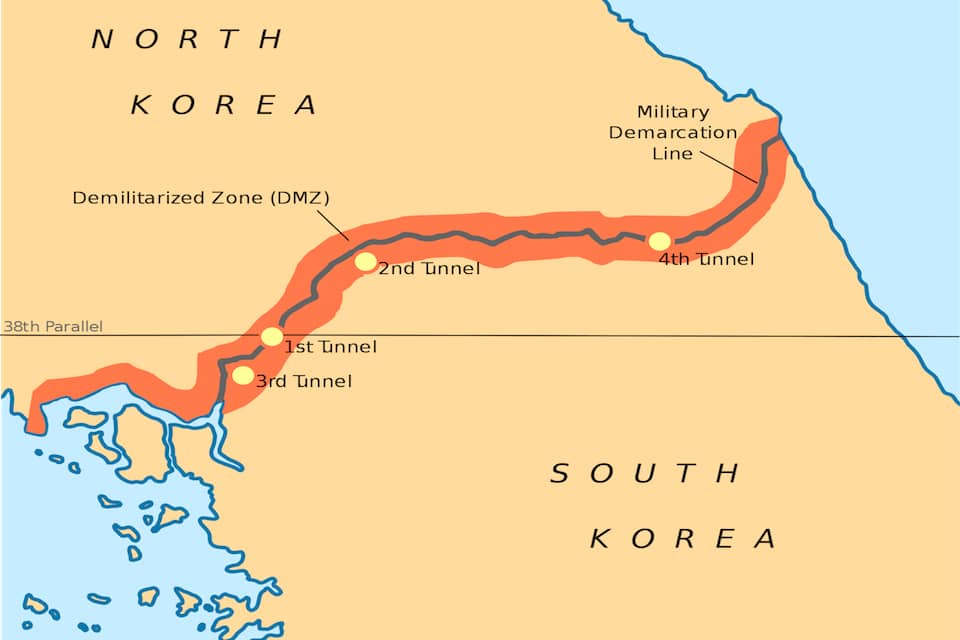
The war ended in 1953 with a ceasefire—not a peace treaty. Technically, the two countries are still at war today.
6. Military Tension and Conflicts
Even today, the border between North and South Korea is one of the most heavily guarded in the world.
There are frequent tensions such as:
- Military drills
- Missile tests
- Threats from both sides
This constant pressure keeps the relationship unstable.
7. Propaganda and Control
North Korea tightly controls information. Its government often:
- Shows South Korea as weak or controlled by foreign powers
- Uses strong messaging to maintain loyalty within the country
This creates a mindset where citizens grow up seeing the South as an enemy.
8. Leadership and Power Structure
North Korea is ruled by a single family system, where power is passed down through generations. Maintaining control is very important, and having an “external enemy” helps justify strict rules.
South Korea, on the other hand, has a democratic system where leaders are elected.
9. Nuclear Weapons Issue
North Korea has developed nuclear weapons, which has increased fear and tension:
- South Korea feels threatened
- Other countries get involved
- Peace talks often fail
This is one of the biggest modern concerns.
10. Not Just “Hate”—Also Politics
It’s important to understand that this situation is not only about hatred.
- Many families were separated during the war
- Some people hope for reunification
- Cultural roots are still the same
The conflict is largely driven by governments, systems, and history—not just personal feelings.
A Quick Comparison
| Feature | North Korea | South Korea |
|---|---|---|
| Government | Communist Dictatorship | Liberal Democracy |
| Main Ally | China / Russia | USA |
| Economy | Mostly focused on Military | High-tech, K-pop, Global Exports |
| Daily Life | Strict control, limited internet | Freedom of speech, high-speed tech |
In Simple Terms
North Korea and South Korea are divided because:
- They were split by powerful countries after World War II
- They follow completely different political systems
- A devastating war created deep wounds
- Ongoing military tension and fear continues today
A Hope for the Future
Even after so many years, the pain of division still exists. Families remain separated, and trust is still fragile.
But deep down, they share the same roots, culture, and history.
We can only hope that one day, peace will replace tension, borders will feel less heavy, and both sides will move toward friendship. A future where understanding grows, and hatred slowly fades from their hearts, is something the world quietly wishes for.
What do you think? Will we see a united Korea in our lifetime? Let us know your thoughts in the comments!
see more about The $7.2 Million Mistake: Why the Alaska Purchase Haunted the USSR
see more about Iran War 2026 Explained: Timeline, Drone Attacks, Strait of Hormuz Crisis & Global Impact
Truly Agree “Hope that one day, peace will replace tension, borders will feel less heavy, and both sides will move toward friendship”.