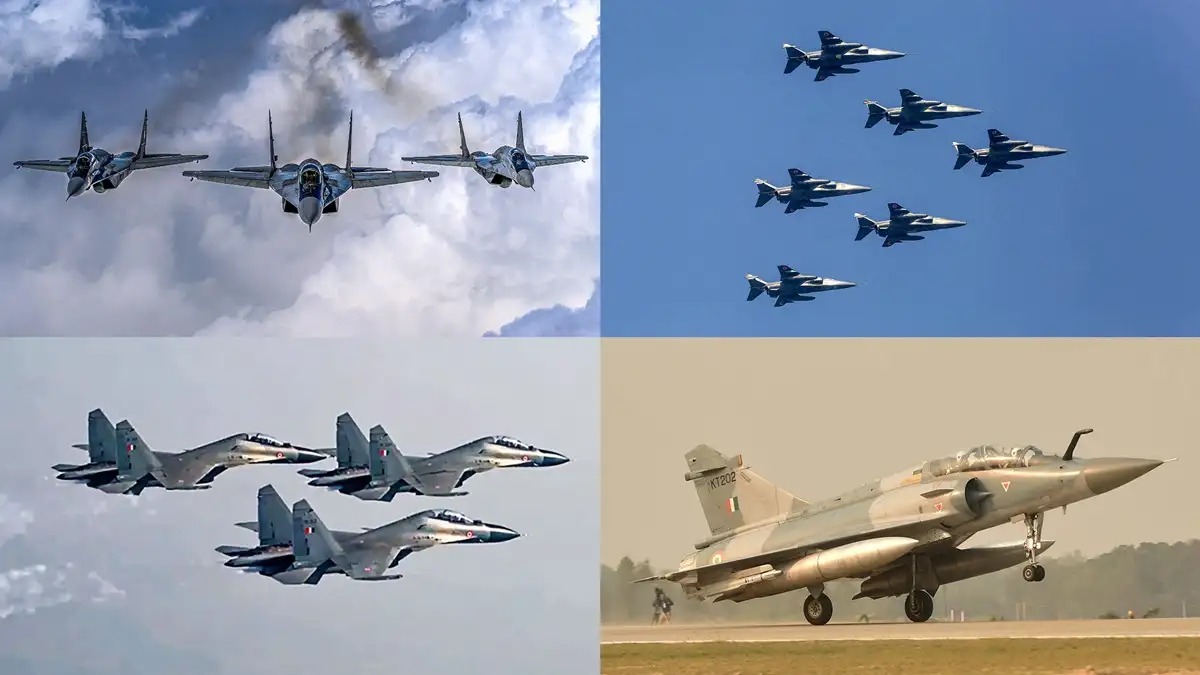
India's frontline fighter fleet includes the French Rafale, Russian-origin Su-30MKI built by HAL, and the indigenous Tejas. Together they form the backbone of one of the world's most powerful air forces.
<h2 class="wp-block-heading">Overview: The Indian Air Force in 2026</h2>
<p>The <strong>Indian Air Force</strong> (IAF) is the <strong>fourth-largest air force</strong> in the world. With over 135,000 personnel and approximately 600+ combat-capable aircraft, it remains one of the most formidable aerial forces on the planet. Yet, it faces a critical challenge: it currently operates around 31 squadrons — well below its sanctioned strength of 42 squadrons needed to fight a simultaneous two-front war against China and Pakistan.</p>
<p>The retirement of the ageing MiG-21 fleet (completed in 2025) has accelerated this gap. However, India is now on an aggressive modernisation path — led by the indigenous Tejas Mk1A, additional Rafale procurement negotiations, and the next-generation AMCA stealth programme. The IAF’s recent debut in combat operations — using Rafale, Mirage 2000 and Su-30MKI jets during <strong>Operation Sindoor</strong> in May 2025 — demonstrated world-class precision strike capabilities and electronic warfare supremacy.</p>
<h2 class="wp-block-heading">1. Dassault Rafale EH/DH (IAF) & Rafale-M (Navy)</h2>
<div class="wp-block-image">
<figure data-spectra-id="spectra-mo2ecwzc-udupnt" class="alignright size-medium"><img src="https://nationnotifier.com/wp-content/uploads/2026/04/dassault-rafale-india-300x200.webp" alt="IAF Dassault Rafale fighter jet equipped with Meteor missiles." class="wp-image-3994" /></figure>
</div>
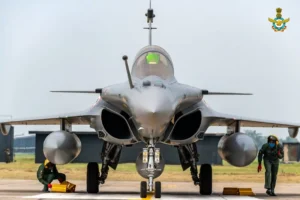
<p>The Rafale is India’s most potent “Omni-role” fighter, capable of performing all combat tasks in a single mission.</p>
<ul class="wp-block-list">
<li><strong>Generation:</strong> 4.5 Gen</li>
<li><strong>Origin:</strong> France (Dassault Aviation)</li>
<li><strong>Top Speed:</strong> Mach 1.8</li>
<li><strong>Price:</strong> Approx. <strong>$215 Million</strong> per aircraft (incl. India-specific enhancements) | <strong>₹1,600+ Crore</strong>.</li>
<li><strong>Range:</strong> 3,700 km (Combat radius: 1,850 km)</li>
<li><strong>Armament:</strong>
<ul class="wp-block-list">
<li><strong>Missiles:</strong> Meteor (BVR), SCALP (Cruise), MICA.</li>
<li><strong>Guns:</strong> 30mm GIAT 30/M791 autocannon.</li>
</ul>
</li>
<li><strong>Hardpoints:</strong> 14 | <strong>Payload:</strong> 9,500 kg.</li>
<li><strong>Fleet Status:</strong> 36 in service | 26 Rafale-M (Marine) in order for the Navy.</li>
<li><strong>Indigenous Content:</strong> Low (approx. 5-10% integration).</li>
</ul>
<h3 class="wp-block-heading">Strength:</h3>
<ul class="wp-block-list">
<li>Beyond Visual Range (BVR) dominance with Meteor missile</li>
<li>Superior electronic warfare system (SPECTRA)</li>
</ul>
<h2 class="wp-block-heading">2. Sukhoi Su-30MKI (The Air Superiority Flanker)</h2>
<div class="wp-block-image">
<figure data-spectra-id="spectra-mo2ek0at-rubqf3" class="alignright size-medium"><img src="https://nationnotifier.com/wp-content/uploads/2026/04/sukhoi-su30mki-iaf-300x200.webp" alt="Indian Air Force Sukhoi Su-30MKI carrying the BrahMos missile." class="wp-image-3995"/></figure>
</div>
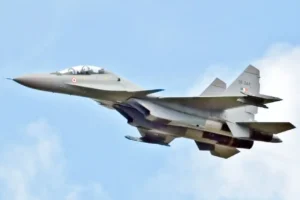
<p>The backbone of the IAF, customized by India to carry heavy weaponry like the BrahMos.</p>
<ul class="wp-block-list">
<li><strong>Generation:</strong> 4+ Gen</li>
<li><strong>Origin:</strong> Russia (Licence-built by HAL, India)</li>
<li><strong>Top Speed:</strong> Mach 2</li>
<li><strong>Price:</strong> <strong>$62 Million</strong> | <strong>₹515 Crore</strong>.</li>
<li><strong>Range:</strong> 3,000 km (Extends with mid-air refueling).</li>
<li><strong>Armament:</strong>
<ul class="wp-block-list">
<li><strong>Missiles:</strong> BrahMos-A (Supersonic cruise), Astra (Indigenous BVR), R-77.</li>
<li><strong>Guns:</strong> 30mm Gryazev-Shipunov GSh-30-1.</li>
</ul>
</li>
<li><strong>Hardpoints:</strong> 12 | <strong>Payload:</strong> 8,000 kg.</li>
<li><strong>Fleet Status:</strong> ~260-270 in service | 12 more in order.</li>
<li><strong>Indigenous Content:</strong> High (Approx. 50%+, being upgraded to “Super Sukhoi” standards).</li>
</ul>
<h3 class="wp-block-heading">Strength:</h3>
<ul class="wp-block-list">
<li>Air dominance + long-range strike</li>
<li>Can carry <strong>BrahMos supersonic cruise missile</strong></li>
</ul>
<h2 class="wp-block-heading">3. HAL Tejas Mk1/Mk1A (The Pride of Make in India)</h2>
<div class="wp-block-image">
<figure data-spectra-id="spectra-mo2ermc9-u6lrfj" class="alignright size-medium"><img src="https://nationnotifier.com/wp-content/uploads/2026/04/hal-tejas-mk1a-300x200.webp" alt="Indigenous Indian Tejas Mk1A fighter jet during a flight test." class="wp-image-3996"/></figure>
</div>
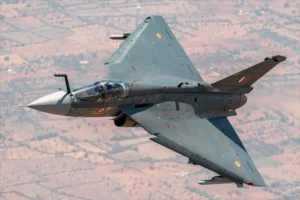
<p>India’s first successful indigenous Light Combat Aircraft (LCA), designed to replace the aging MiG-21s.</p>
<ul class="wp-block-list">
<li><strong>Generation:</strong> 4+ Gen</li>
<li><strong>Origin:</strong> India (HAL/ADA)</li>
<li><strong>Top Speed:</strong> Mach 1.6</li>
<li><strong>Price:</strong> <strong>$38-$45 Million</strong> | <strong>₹310-370 Crore</strong>.</li>
<li><strong>Range:</strong> 3,000 km (Ferry range).</li>
<li><strong>Armament:</strong>
<ul class="wp-block-list">
<li><strong>Missiles:</strong> Astra, Python-5, R-73.</li>
<li><strong>Guns:</strong> 23mm GSh-23 dual-barrel.</li>
</ul>
</li>
<li><strong>Hardpoints:</strong> 8 | <strong>Payload:</strong> 3,500 kg – 5,300 kg.</li>
<li><strong>Fleet Status:</strong> ~40 Mk1 in service | 83 Mk1A + 97 more in order.</li>
<li><strong>Indigenous Content:</strong> 60% – 75% (Targeting 80%+ with Mk2).</li>
</ul>
<h3 class="wp-block-heading">Strength:</h3>
<ul class="wp-block-list">
<li>Lightweight, cost-effective</li>
<li>Future-ready upgrades (Tejas Mk2)</li>
</ul>
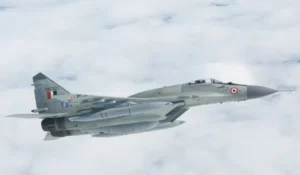
<h2 class="wp-block-heading">4. MiG-29 UPG “Baaz” (The Quick Interceptor)</h2>
<div class="wp-block-image">
<figure data-spectra-id="spectra-mo2eugq7-357jui" class="alignright size-medium"><img src="https://nationnotifier.com/wp-content/uploads/2026/04/mig29-upg-baaz-300x175.webp" alt="mig29 upg baaz" class="wp-image-3997"/></figure>
</div>
<p>An air superiority fighter upgraded for multi-role capability and better electronics.</p>
<ul class="wp-block-list">
<li><strong>Generation:</strong> 4th Gen</li>
<li><strong>Origin:</strong> Russia (Upgraded in India)</li>
<li><strong>Top Speed:</strong> Mach 2.3</li>
<li><strong>Price:</strong> <strong>$30-35 Million</strong> | <strong>₹250-290 Crore</strong>.</li>
<li><strong>Range:</strong> 1,430 km.</li>
<li><strong>Armament:</strong> R-77 and R-27 missiles; 30mm GSh-30-1 cannon.</li>
<li><strong>Hardpoints:</strong> 7 | <strong>Payload:</strong> 3,500 kg.</li>
<li><strong>Fleet Status:</strong> ~60 in service.</li>
<li><strong>Indigenous Content:</strong> Low (approx. 10% integration).</li>
</ul>
<h3 class="wp-block-heading">Strength:</h3>
<ul class="wp-block-list">
<li>High maneuverability</li>
<li>Quick interception role</li>
</ul>
<h2 class="wp-block-heading">Comparison Table (Quick Overview)</h2>
<figure class="wp-block-table"><table class="has-fixed-layout"><thead><tr><th>Jet</th><th>Generation</th><th>Range</th><th>Payload</th><th>Strength</th></tr></thead><tbody><tr><td>Rafale</td><td>4.5</td><td>3700 km</td><td>9500 kg</td><td>Best BVR</td></tr><tr><td>Su-30MKI</td><td>4++</td><td>3000 km</td><td>8000 kg</td><td>Heavy dominance</td></tr><tr><td>Tejas</td><td>4</td><td>1700 km</td><td>4000 kg</td><td>Indigenous</td></tr><tr><td>MiG-29</td><td>4</td><td>1430 km</td><td>4000 kg</td><td>Agile interceptor</td></tr></tbody></table></figure>
<h2 class="wp-block-heading">India’s Air Power Strategy</h2>
<p>India uses a <strong>multi-layered fighter fleet strategy</strong>:</p>
<ul class="wp-block-list">
<li><strong>Heavy Fighters:</strong> Su-30MKI (dominance)</li>
<li><strong>Advanced Fighters:</strong> Rafale (precision + nuclear deterrence)</li>
<li><strong>Light Fighters:</strong> Tejas (cost-efficient defense)</li>
<li><strong>Legacy Upgrades:</strong> Mirage 2000 & MiG-29</li>
</ul>
<h2 class="wp-block-heading">Why India’s Fighter Fleet is Powerful</h2>
<ul class="wp-block-list">
<li>Mix of <strong>Western + Russian + Indigenous tech</strong></li>
<li>Strong missile systems like <strong>Meteor & BrahMos</strong></li>
<li>Strategic geographic advantage</li>
<li>Continuous modernization</li>
</ul>
<h2 class="wp-block-heading">The Future of Nation Notifier’s Defence Analysis</h2>
<p>India is now moving toward the <strong>AMCA (Advanced Medium Combat Aircraft)</strong>, a 5th-generation stealth fighter. With the recent approval for 97 more Tejas jets, the “Made in India” tag is set to dominate the skies. India is in advanced negotiations for 114 additional Rafale jets for the IAF under the Make-in-India route, with a deal value estimated at ~$22 billion. The IAF’s confidence in Rafale has only grown since Operation Sindoor.</p>
<p>Which jet do you think is the true king of Indian skies: The stealthy Rafale or the powerful Sukhoi? Let us know in the comments!</p>
<p>see more <a href="https://nationnotifier.com/brahmos-the-brahmastra-of-modern-warfare-and-indias-defence-superiority/" data-type="post" data-id="2283">BrahMos: The “Brahmastra” of Modern Warfare and India’s Defence Superiority</a></p>
<p>see more <a href="https://nationnotifier.com/what-is-strait-of-hormuz-2026-crisis/" data-type="post" data-id="2280">What is Strait of Hormuz? Why It Matters to the World</a></p>
Overview: The Indian Air Force in 2026
The Indian Air Force (IAF) is the fourth-largest air force in the world. With over 135,000 personnel and approximately 600+ combat-capable aircraft, it remains one of the most formidable aerial forces on the planet. Yet, it faces a critical challenge: it currently operates around 31 squadrons — well below its sanctioned strength of 42 squadrons needed to fight a simultaneous two-front war against China and Pakistan.
The retirement of the ageing MiG-21 fleet (completed in 2025) has accelerated this gap. However, India is now on an aggressive modernisation path — led by the indigenous Tejas Mk1A, additional Rafale procurement negotiations, and the next-generation AMCA stealth programme. The IAF’s recent debut in combat operations — using Rafale, Mirage 2000 and Su-30MKI jets during Operation Sindoor in May 2025 — demonstrated world-class precision strike capabilities and electronic warfare supremacy.
1. Dassault Rafale EH/DH (IAF) & Rafale-M (Navy)
The Rafale is India’s most potent “Omni-role” fighter, capable of performing all combat tasks in a single mission.
Generation: 4.5 Gen
Origin: France (Dassault Aviation)
Top Speed: Mach 1.8
Price: Approx. $215 Million per aircraft (incl. India-specific enhancements) | ₹1,600+ Crore.
Range: 3,700 km (Combat radius: 1,850 km)
Armament:
Missiles: Meteor (BVR), SCALP (Cruise), MICA.
Guns: 30mm GIAT 30/M791 autocannon.
Hardpoints: 14 | Payload: 9,500 kg.
Fleet Status: 36 in service | 26 Rafale-M (Marine) in order for the Navy.
India is now moving toward the AMCA (Advanced Medium Combat Aircraft), a 5th-generation stealth fighter. With the recent approval for 97 more Tejas jets, the “Made in India” tag is set to dominate the skies. India is in advanced negotiations for 114 additional Rafale jets for the IAF under the Make-in-India route, with a deal value estimated at ~$22 billion. The IAF’s confidence in Rafale has only grown since Operation Sindoor.
Which jet do you think is the true king of Indian skies: The stealthy Rafale or the powerful Sukhoi? Let us know in the comments!