News

Iran War 2026 Explained: Timeline, Drone Attacks, Strait of Hormuz Crisis & Global Impact

The “2026 Iran War” has become a defining moment in modern history, fundamentally shifting the geopolitical landscape of the Middle East. What began as a series of targeted operations quickly spiraled into a multi-front conflict involving global powers and bringing the world’s energy supply to a standstill.

Quick Facts: The War at a Glance

  • Start Date: 28 February 2026
  • Key Combatants: United States & Israel vs. Iran
  • Primary Causal Factor: Preemptive strikes on Iran’s nuclear facilities and leadership following the collapse of Geneva negotiations
  • Casualties: Over 3,500 in Iran (including ~1,600 civilians) and roughly 1,345 in Lebanon
  • Current Status: A fragile two-week ceasefire was agreed upon starting 7 April 2026

1. Why and How the War Started

The conflict was ignited on 28 February 2026, when the U.S. and Israel launched Operation Epic Fury and Operation Rising Lion. The strikes were framed as a preemptive measure to dismantle Iran’s nuclear weapons program, which Israel claimed posed an “existential threat”.

The opening wave was devastating: it targeted Iranian air defences, missile infrastructure, and the high-ranking leadership in Tehran. Ayatollah Ali Khamenei, Iran’s Supreme Leader since 1989, was killed in these initial strikes.

2. Big Attacks and Targets

The war saw unprecedented “saturation” tactics, with both sides striking vital strategic and civilian hubs:

3. Drones and Missiles: The Numbers

Iran utilized its vast arsenal to overwhelm modern air defense systems:

  • Launch Volume: Over 500 ballistic missiles were fired by Iran during the initial 12-day high-intensity phase.
  • Targeted Countries: Strikes reached beyond Israel to include U.S. military installations and allied Gulf states like the UAE, Saudi Arabia, and Kuwait.
  • Defense Performance: While Israel claimed an 80-90% interception rate using AI-integrated systems, several missiles still struck residential areas in central Israel, causing significant destruction.

4. Aircraft and Naval Losses

The air war saw significant hardware losses for the first time in decades:

  • U.S. Losses: At least one U.S. F-15E fighter jet was shot down over western Iran on 3 April 2026. Iran also claimed to have downed a U.S. A-10 aircraft near the Strait of Hormuz.
  • Naval Casualties: An Iranian warship was reportedly sunk by a U.S. submarine in the Indian Ocean on 4 March.

5. The Blockade of the Strait of Hormuz

In a move that sent global oil prices soaring to $126 per barrel, Iran effectively halted traffic through the 
Strait of Hormuz on 28 February 2026.

  • Why the Halt?: Tehran used the “oil weapon” to pressure the international community to stop the U.S.-led offensive.
  • The Method: The IRGC used sea mines, drone boats, and satellite jamming to make the strait impassable for commercial tankers.
  • The Result: Approximately 20-25% of global oil and LNG trade was disrupted, leading to a massive energy shock.

Global Impact

  • Oil prices surged dramatically
  • Supply chain disruptions worldwide
  • Inflation risk increased globally

Why This War Matters Globally

🌍 1. Energy Crisis

Biggest oil disruption in history

⚔️ 2. Drone Warfare Era

Cheap drones vs expensive systems

🚢 3. Trade Chokepoint Control

Control of Hormuz = global power

💰 4. Economic Shockwaves

Inflation, fuel price rise, market instability

Conclusion

The Iran war is no longer a regional conflict—it’s a global economic and military crisis.

With drone warfare, oil chokepoints, and multi-country involvement, it signals a new era of modern warfare that every nation—including India—must prepare for.

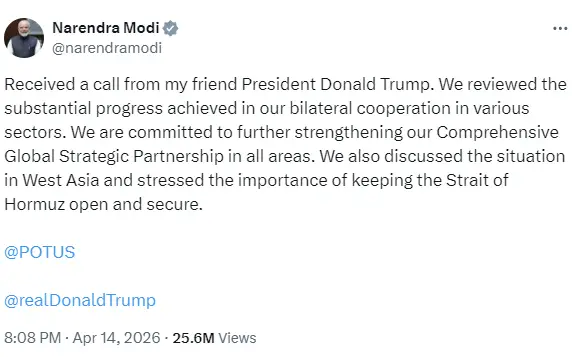
see more about Modi’s tweet about Trump’s Call

see more about Top 5 Most Powerful Cruise Missiles in the World (2025 Rankings)

Amit Kumar

Defence and geopolitics analyst covering India defence news, global conflicts, military strategy, and international relations. Delivering clear, fact-based analysis on wars, security, and world affairs.

Recent Posts

Two Crowns, One World: Why China has Surpassed the US (But Not Where You Think)

Is the US losing its crown? Discover why China's 232x shipbuilding lead and 'PhD Avalanche'…

1 day ago

Remembering the Pahalgam Attack Anniversary: How India Avenged the Baisaran Massacre

On the first anniversary of the Pahalgam attack, we revisit the tragic events of April…

3 days ago

HAL Tejas Mk2 vs Rafale: Why India’s 4.5 Gen Powerhouse is the Ultimate Game-Changer

Is the HAL Tejas Mk2 better than the Rafale? Explore the "Indian Advantage," indigenous weapons,…

3 days ago

HAL Prachand: How India’s Indigenous Light Combat Helicopter Dominates the Himalayas

Discover why the HAL Prachand is the only attack helicopter in the world capable of…

4 days ago

Why Do North and South Korea Hate Each Other? The Simple Truth

Ever wondered why the two Koreas are so divided? From the Japanese occupation to modern…

5 days ago

The $7.2 Million Mistake: Why the Alaska Purchase Haunted the USSR

Russia’s $7.2 million sale of Alaska in 1867 looked like a smart defensive move—but it…

5 days ago